How to Get Rid of Bad Breath: A Dentist-Approved Evidence-Based Guide
Discover proven steps to eliminate oral malodor at the source, from tongue scraping and interdental cleaning to microbiome rebalancing.
Chronic bad breath (halitosis) affects more than 80 million people in North America alone, creating acute social anxiety, self-consciousness, and frustration.
To get rid of bad breath permanently, you must eliminate the anaerobic bacteria living on the posterior third of the tongue and in gum crevices that ferment protein debris into volatile sulfur compounds (VSCs).
Masking the odor with sugary mints, chewing gum, or alcohol-based mouthwashes provides only 15 to 30 minutes of temporary relief before the odor returns - often worse than before. A lasting solution requires a combined approach: mechanical debridement (removing the physical bacterial mass) followed by biological recolonization (seeding beneficial bacterial strains to crowd out odor-producers).
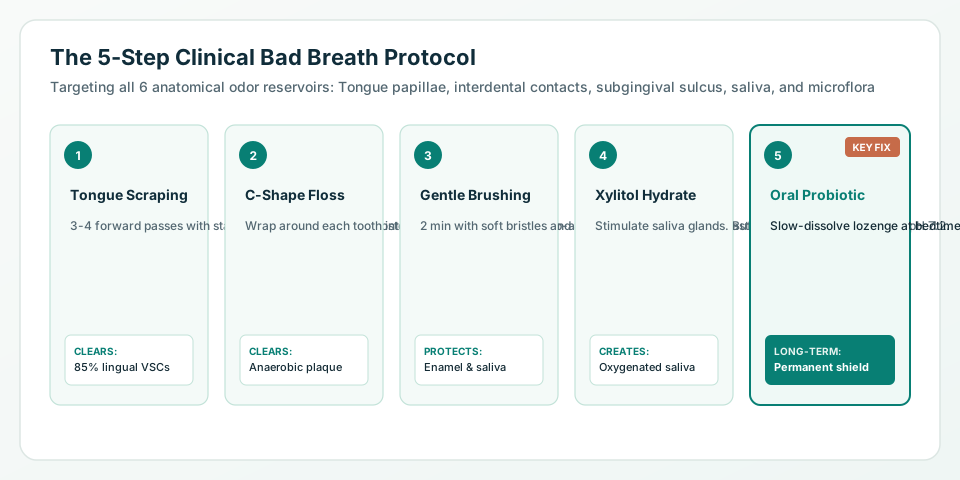
Key Takeaways: How to Eliminate Bad Breath
- The Source: Over 85% of bad breath originates directly inside the oral cavity, primarily from volatile sulfur compounds like hydrogen sulfide (rotten eggs) and methyl mercaptan (decay).
- The #1 Mechanical Tool: A rigid stainless steel tongue scraper removes 75% more volatile sulfur gases than tooth brushing alone.
- The Mouthwash Mistake: Alcohol mouthwashes dehydrate oral mucosa and kill protective bacteria, triggering a severe rebound odor cycle within an hour.
- The Biological Solution: Daily chewable oral probiotics introducing Lactobacillus reuteri and Bifidobacterium lactis displace anaerobic pathogens and maintain all-day breath freshness.
Problem → Cause → Fix: Halitosis Diagnostic Matrix
| Odor Quality | Primary Anatomical Site | Underlying Biological Mechanism | Clinically Proven Solution |
|---|---|---|---|
| Rotten egg smell | Posterior tongue dorsum | Anaerobic bacteria cleaving cysteine into hydrogen sulfide | Scrape tongue twice daily with a metal scraper; use an oral probiotic lozenge. |
| Pungent fecal / decaying smell | Interdental spaces & deep pockets | P. gingivalis fermenting trapped meat and blood proteins | Daily C-shape flossing followed by professional dental prophylaxis. |
| Sour / Stale smell upon waking | Full oral cavity | Nocturnal salivary cessation allowing bacterial bloom | Hydrate before bed; run a bedroom humidifier; chew xylitol gum. |
| Sulfur smell when coughing or swallowing | Palatine tonsillar crypts | Calcified tonsil stones (tonsilloliths) harboring anaerobes | Warm saline gargles; flush crypts gently with low-pressure water. |
5 Evidence-Backed Steps to Cure Bad Breath
Step 1: Scrape Your Tongue Dorsum (The High-Yield Habit)
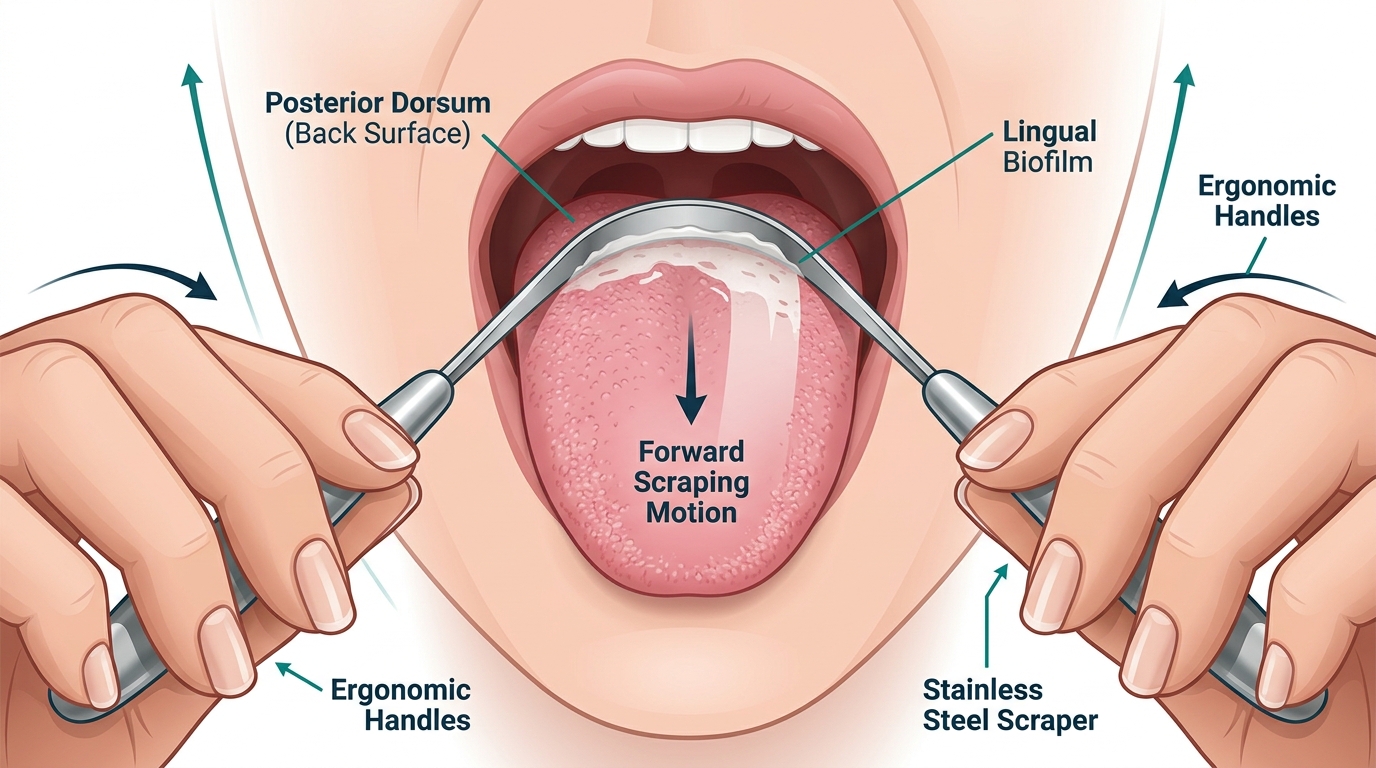
Mechanical tongue scraping removes up to 75% of volatile sulfur compounds from the mouth within 30 seconds. The posterior third of your tongue is covered with thousands of microscopic filiform papillae that act like a dense sponge, trapping food debris, dead white blood cells, and sulfur-producing anaerobes. Use a stainless steel or copper U-shaped tongue scraper every morning before breakfast.
Step 2: Floss Before You Brush (Clean the Missing 40%)
Toothbrushes cannot reach the tight contact areas between teeth, leaving undisturbed anaerobic colonies to putrefy between your molars. Floss daily using the wrap-around C-shape technique. Flossing before you brush loosens trapped food particles and allows fluoride or remineralizing toothpaste to penetrate between teeth.
Step 3: Eliminate Alcohol-Based Mouthwashes
Alcohol is a desiccant that rapidly evaporates saliva, creating the exact dry, oxygen-poor environment that sulfur-producing bacteria require to thrive. Replace alcohol mouthwashes with alcohol-free rinses containing zinc gluconate, chlorine dioxide, or pure water.
Step 4: Stimulate Salivary Flow with Xylitol
Saliva is your mouth’s natural immunological rinse, continuously bathing teeth in antimicrobial enzymes (lysozyme and lactoferrin) and bicarbonate buffers. Chew 100% xylitol-sweetened gum after meals. Xylitol physically stimulates the salivary glands while actively inhibiting Streptococcus mutans growth.
Step 5: Recolonize with Targeted Oral Probiotics
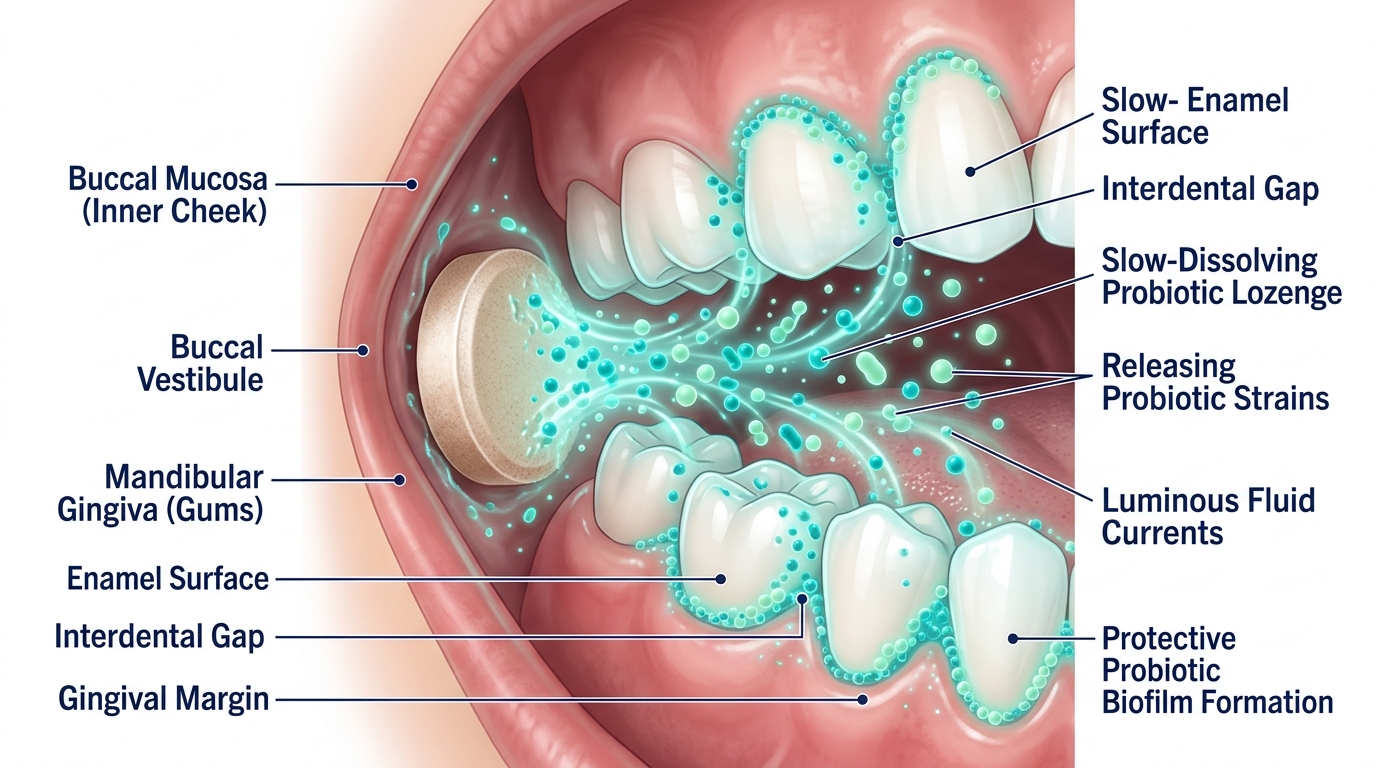
Mechanical cleaning creates a temporary clean slate, but if you do not reseed the oral cavity, fast-growing odor bacteria will reclaim the space within hours. Sucking on an oral probiotic chewable lozenge before sleep introduces billions of live, beneficial Lactobacillus and Streptococcus bacteria that physically crowd out odor-producing anaerobes.
Real-World Scenarios: Breaking the Bad Breath Cycle
Scenario 1: The “Mouthwash Addict”
- Situation: A 32-year-old marketing manager used intense alcohol mouthwash four times daily. Their breath felt fresh for 20 minutes, followed by an intense dry-mouth sensation and a sour, stale odor that coworkers noticed.
- Action: They discontinued all alcohol mouthwashes, bought a stainless steel tongue scraper, and started a nightly oral probiotic chewable.
- Outcome: Within 5 days, dry-mouth symptoms vanished. Within 2 weeks, gas-detector breath measurements dropped by 64%, and they eliminated the need for continuous breath mints.
Scenario 2: The Bleeding Gum & Bad Breath Link
- Situation: A 48-year-old experienced bad breath accompanied by pink saliva in the sink every time they brushed. They avoided flossing because it made their gums bleed.
- Action: They started gentle daily flossing with expanding woven floss and scheduled a dental cleaning.
- Outcome: Subgingival tartar was removed, bleeding stopped on day 9, and interdental odor disappeared completely.
What Most People Get Wrong About Bad Breath
[!WARNING] Common Fallacy: Assuming that bad breath comes from the stomach. Many people waste hundreds of dollars on stomach acid pills, digestive enzymes, or charcoal capsules. In over 85% to 90% of all medical cases, halitosis originates strictly in the oral cavity. Unless you have severe GERD, Zenker’s diverticulum, or untreated bowel obstruction, the stomach is closed off by the lower esophageal sphincter. Focus your efforts on your tongue and gums.
Decision Framework: What Is Your Next Logical Step?
| Your Current Routine | Missing Link | Recommended Next Action |
|---|---|---|
| Never used a metal tongue scraper | Lingual papillae reservoir untouched | Obtain a U-shaped stainless scraper; perform 3 passes every morning. |
| Scrape & brush, but breath still stale | Interdental anaerobic plaque untouched | Floss daily with the C-shape wrap method and switch to SLS-free paste. |
| Clean thoroughly, but odor returns by afternoon | Rapid anaerobic recolonization | Dissolve a 3.5B CFU oral probiotic lozenge before sleep to rebalance flora. |
| Persistent bleeding gums, pain, or loose teeth | Periodontitis or subgingival calculus | Schedule an urgent dental exam for ultrasonic scaling and root planing. |
When to Seek Dental or Medical Evaluation
Consult a licensed dentist or physician if:
- Bad breath persists after 14 days of thorough tongue scraping, daily flossing, and proper hydration.
- You notice deep periodontal pockets, swollen or receding gums, or teeth that feel slightly loose.
- You have dry mouth accompanied by dry eyes and joint pain (ruling out Sjögren’s syndrome).
- Your breath smells distinctly sweet and fruity (ruling out diabetic ketoacidosis) or ammonia-like (ruling out renal complications).
Essential Dental Care Notice: oral concerns
Supplements and oral probiotics are exploratory adjuncts, not primary clinical treatments. They cannot reverse deep periodontal pockets, remove calcified tartar, or cure active dental infections. If you experience persistent bleeding, severe bad breath lasting weeks, or oral pain, schedule an in-person evaluation with a licensed dental professional.
Scientific Sources & Evidence References
Our editorial desk validates medical statements using peer-reviewed dental literature, clinical trials, and clinical consensus guidelines.
- Interventions for managing halitosis: Cochrane Database of Systematic Reviews
- The effect of mechanical tongue cleaning on oral malodor
- Efficacy of oral probiotics in the management of halitosis: a systematic review
Spot an error or outdated supplement fact? We prioritize scientific accuracy. Submit a correction or editorial feedback →