Tonsil Stones & Bad Breath: Causes, Safe Removal & Long-Term Prevention
Why tonsil stones smell foul, how tonsillar crypts trap debris, safe ENT-approved home remedies, and how to prevent them from returning.
If you have ever coughed up a tiny, yellowish-white crumb that felt firm and smelled overpoweringly of sulfur, rotten eggs, or garbage when crushed, you have experienced a tonsil stone (clinically called a tonsillolith).
Tonsil stones smell foul because they are dense biological concretions of dead epithelial cells, trapped food proteins, and concentrated anaerobic bacteria producing volatile sulfur compounds.
Even if your teeth and gums are perfectly clean, exhaling air pushes breath directly past the tonsils, carrying these volatile sulfur gases straight out of your mouth.
Key Takeaways: Tonsil Stones at a Glance
- The Root Anatomy: Tonsils are not smooth spheres; they are honeycombed with deep microscopic crevices called tonsillar crypts where debris naturally gets trapped.
- The Odor Cause: Trapped debris undergoes anaerobic putrefaction, releasing massive spikes of hydrogen sulfide and methyl mercaptan.
- The Golden Safety Rule: Never gouge, poke, or jab tonsils with sharp instruments (bobby pins, pencils, or toothpicks). Tonsil tissue is highly vascular and bleeds easily.
- The Long-Term Fix: Gentle warm saline gargling to flush crypts, combined with oral probiotic lozenges to colonize the oropharynx with non-stone-forming bacteria.
Problem → Cause → Fix: Tonsil Stone Manifestations
| Symptom / Observation | What It Means | Correct Action |
|---|---|---|
| Coughing up small white, foul-smelling chunks | Natural shedding of mature tonsilloliths | Gargle daily with warm salt water to facilitate clearing. |
| Sensation of something caught in the throat (Globus) | Larger stone protruding from a tonsillar crypt | Use a blunt, water-moistened cotton swab or low-pressure water flosser. |
| Ear pain when swallowing (Referred otalgia) | Shared glossopharyngeal nerve irritation from a deep stone | ENT evaluation to inspect deep crypts and rule out tonsillitis. |
| Visible red, swollen tonsils with white pus streaks | Active bacterial infection (Tonsillitis / Strep) | Do not attempt removal. Seek prompt medical assessment for antibiotics. |
4 Safe, ENT-Approved Ways to Remove Tonsil Stones at Home
1. The Vigorous Warm Salt Water Gargle
Dissolve half a teaspoon of salt into 8 ounces of warm water. Tilt your head back and gargle vigorously for 30 seconds, repeating 3 times. The mechanical churning action dislodges loose debris, while the hypertonic salt solution reduces local mucosal swelling, allowing the crypt to open and release trapped stones naturally.
2. The Moistened Cotton Swab (Q-Tip) Method
If a stone is clearly visible and protruding:
- Lightly dampen a clean cotton swab with water.
- In a well-lit mirror, very gently press on the soft tissue immediately adjacent to the stone (not directly on the stone itself).
- Roll the swab upward to ease the stone out of the pocket.
- Stop immediately if you experience pain or see any trace of blood.
3. Low-Pressure Water Syringe or Irrigation
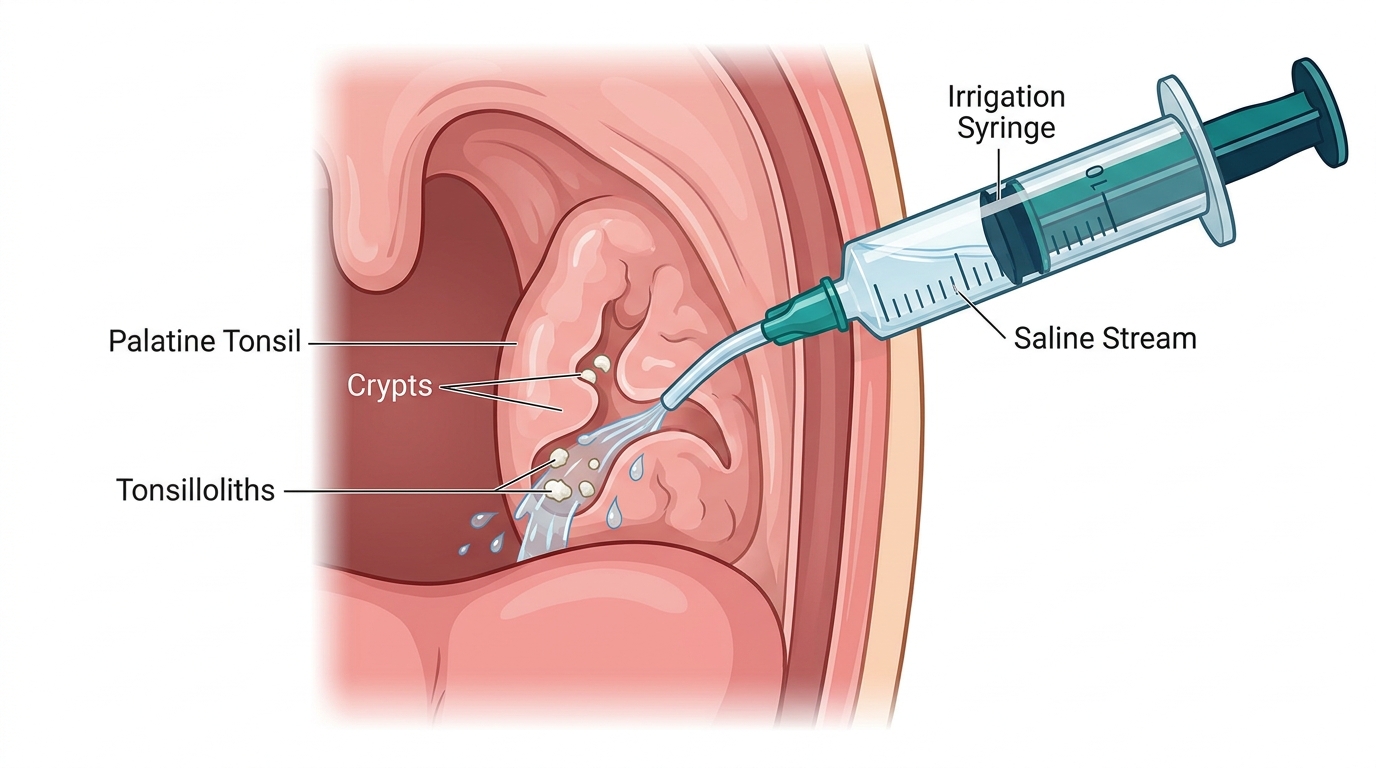
Using a standard dental water flosser on high pressure will tear delicate tonsil tissue. However, using a specialized tonsil-safe curved-tip irrigation syringe or a water flosser set strictly to its lowest gentle flow setting can flush out crypts painlessly with warm saline.
4. Coughing & Swallowing Flexion
Flexing your throat muscles and performing a dry, deliberate cough often pops loose stones free into your mouth without any physical contact.
What You Must Never Do
- Never use pointed objects: Toothpicks, fingernails, bobby pins, or tweezers can puncture tonsillar blood vessels or push bacteria deeper into the peritonsillar space.
- Never aggressively squeeze tonsils: Bruising tonsillar tissue causes chronic inflammation that enlarges the crypts, creating even bigger traps for future stones.
How to Prevent Tonsil Stones from Returning
Tonsil stones recur because the physical crypts remain present. While you cannot change the shape of your tonsils without surgical removal (tonsillectomy), you can prevent debris from calcifying:
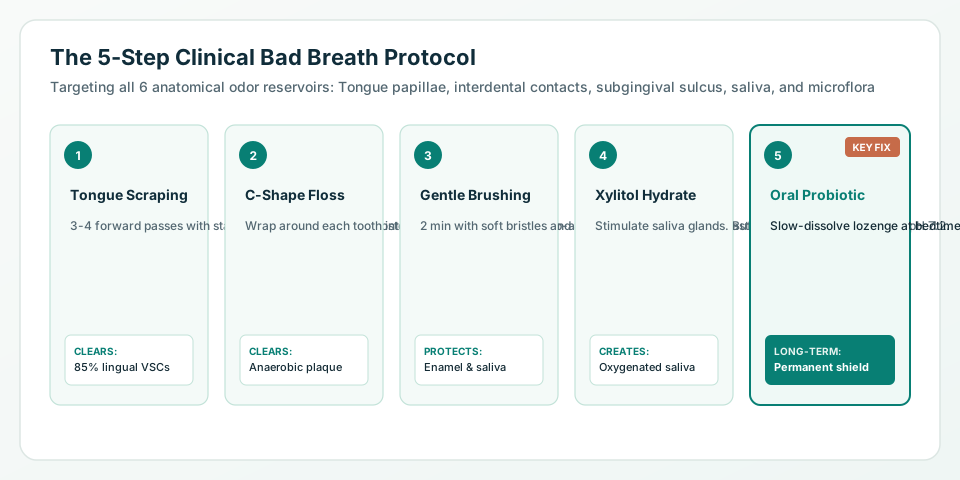
- Clean Your Tongue Daily: The back of your tongue sits directly adjacent to your palatine tonsils. When tongue coating is thick, bacteria migrate into tonsillar crypts every time you swallow.
- Stay Thoroughly Hydrated: Adequate water intake keeps saliva thin and fluid, continuously washing crypt openings.
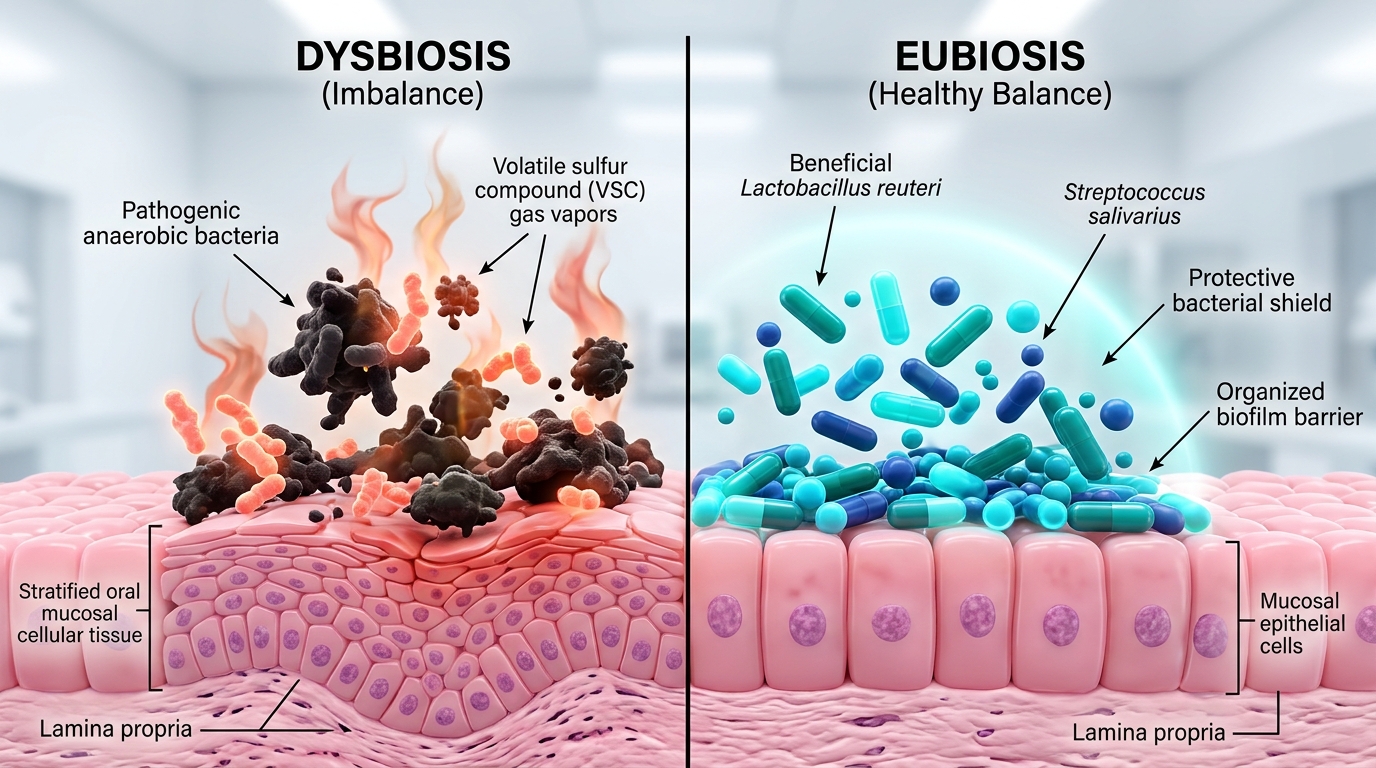
- Recolonize the Throat with Oral Probiotics: Dissolving an oral probiotic chewable slowly at the back of your throat bathes tonsillar tissue in beneficial species (S. salivarius and L. reuteri). These beneficial strains produce natural bacteriocins that inhibit the anaerobic bacteria responsible for calcification and sulfur gas generation.
Essential Dental Care Notice: oral concerns
Supplements and oral probiotics are exploratory adjuncts, not primary clinical treatments. They cannot reverse deep periodontal pockets, remove calcified tartar, or cure active dental infections. If you experience persistent bleeding, severe bad breath lasting weeks, or oral pain, schedule an in-person evaluation with a licensed dental professional.
Scientific Sources & Evidence References
Our editorial desk validates medical statements using peer-reviewed dental literature, clinical trials, and clinical consensus guidelines.
- Microbiological and histological analysis of tonsilloliths
- Halitosis associated with tonsilloliths: a clinical investigation
Spot an error or outdated supplement fact? We prioritize scientific accuracy. Submit a correction or editorial feedback →