White Tongue: Causes, How to Clean It, and When to See a Doctor
Why your tongue turns white, how to distinguish benign papillae buildup from oral thrush, and safe methods to clear the coating.
Looking in the bathroom mirror and seeing a thick, chalky white coating across your tongue can be alarming. Many people worry it indicates a serious systemic illness or an uncontrolled fungal infection.
In the vast majority of cases, however, a white tongue is simply an accumulation of food debris, dead epithelial cells, and oral bacteria trapped between enlarged, inflamed tongue papillae.
Here is the science behind why white tongue happens, how to safely remove it, and how to tell benign coating apart from medical conditions like oral thrush or leukoplakia.
What Causes the White Coating?
Your tongue is carpeted with thousands of microscopic projections called filiform papillae. Under normal circumstances, chewing fibrous foods and swallowing natural saliva frictionally wears these papillae down, keeping the tongue a healthy, moist coral pink.
When filiform papillae become irritated, inflamed, or lack mechanical stimulation, they can elongate (hypertrophy). These elongated papillae act like shag carpeting, trapping:
- Desquamated (shed) epithelial cells from your cheeks and gums
- Trapped microscopic food particles
- Anaerobic sulfur-producing bacteria
- Normal salivary proteins and mucous
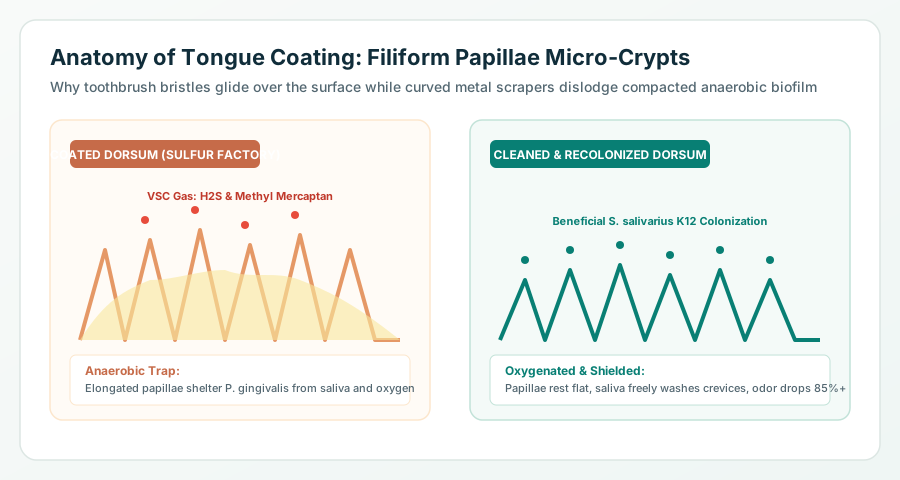
Common Contributing Factors:
- Mouth breathing & dehydration: Sleeping with your mouth open dries out saliva, preventing normal biological clearing.
- Soft, low-fiber diets: Eating exclusively soft foods provides zero frictional friction to exfoliate the papillae.
- Alcohol-based mouthwashes: Chemical irritation from alcohol dries the tongue surface.
- Smoking or vaping: Hot inhaled gases irritate papillae, triggering defensive keratinization.
- Recent antibiotic use: Antibiotics kill commensal bacteria, temporarily altering the oral ecosystem.
How to Tell Benign Coating from Oral Thrush (Candida)
It is crucial to differentiate normal papilla buildup from oral candidiasis (fungal thrush):
| Feature | Benign Tongue Coating | Oral Thrush (Candida) |
|---|---|---|
| Appearance | Uniform, thin-to-medium film | Creamy, curd-like raised patches |
| Location | Primarily back & center of tongue | Can spread to inner cheeks, gums, roof of mouth |
| Ease of Removal | Easily scraped away with a scraper | Scrapes off with difficulty; leaves raw, red bleeding tissue underneath |
| Sensations | Usually painless; may cause bad taste | Burning sensation, soreness, loss of taste |
| Medical Risk | Very common in healthy adults | Common in infants, elderly, immunocompromised, or post-antibiotic |
If your white patches do not scrape off, or leave bleeding, tender red surfaces underneath, do not force them. Consult a dentist or physician for an antifungal evaluation.
3 Safe Steps to Clear a White Tongue
1. Use a Dedicated Metal Tongue Scraper
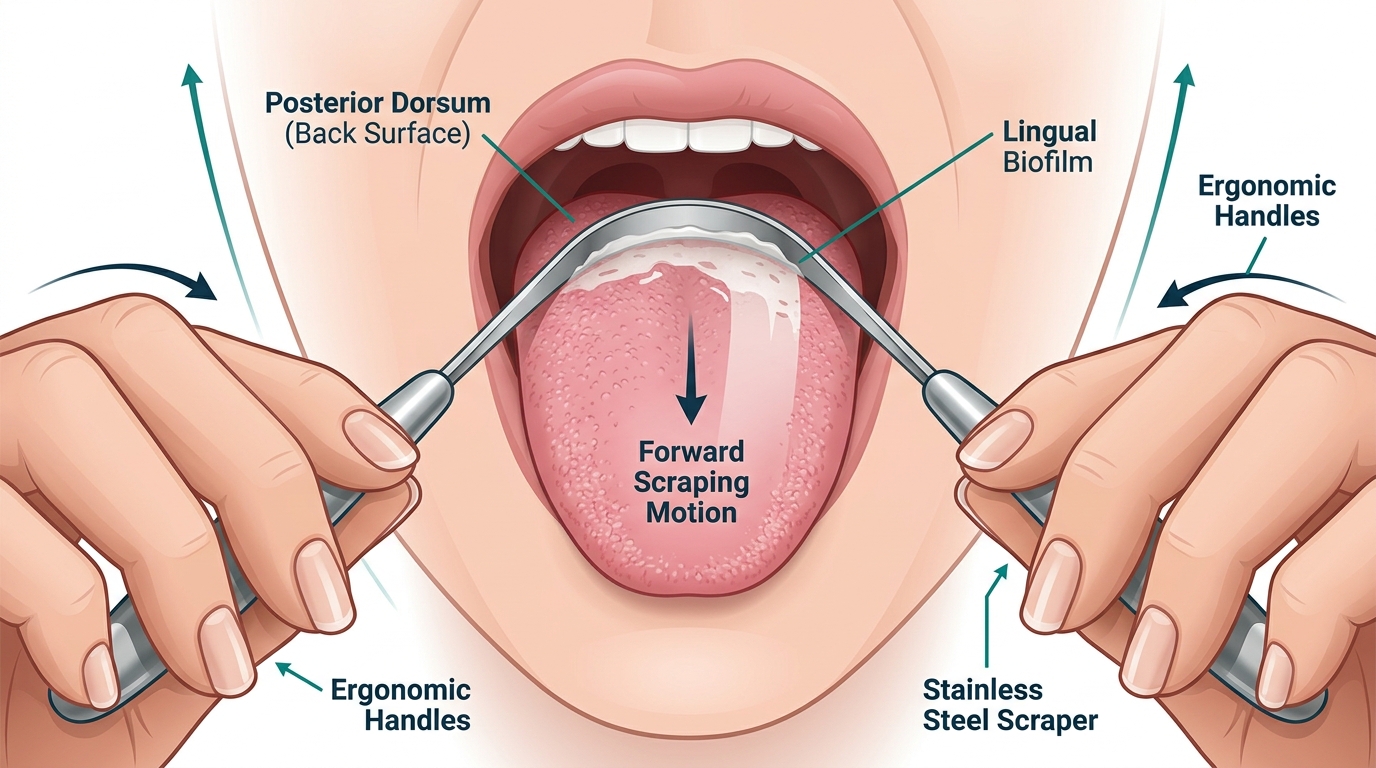
Do not scrub vigorously with a stiff toothbrush, which can lacerate swollen papillae. Use a smooth stainless steel tongue scraper:
- Extend your tongue comfortably.
- Place the curved edge at the back of the tongue.
- Pull forward in one gentle, smooth motion.
- Rinse and repeat 3 to 4 times.
2. Hydrate Thoroughly
Drink adequate water throughout the day. Water keeps saliva thin and fluid, allowing its natural antimicrobial enzymes to wash over papillae.
3. Support Oral Microbiome Diversity
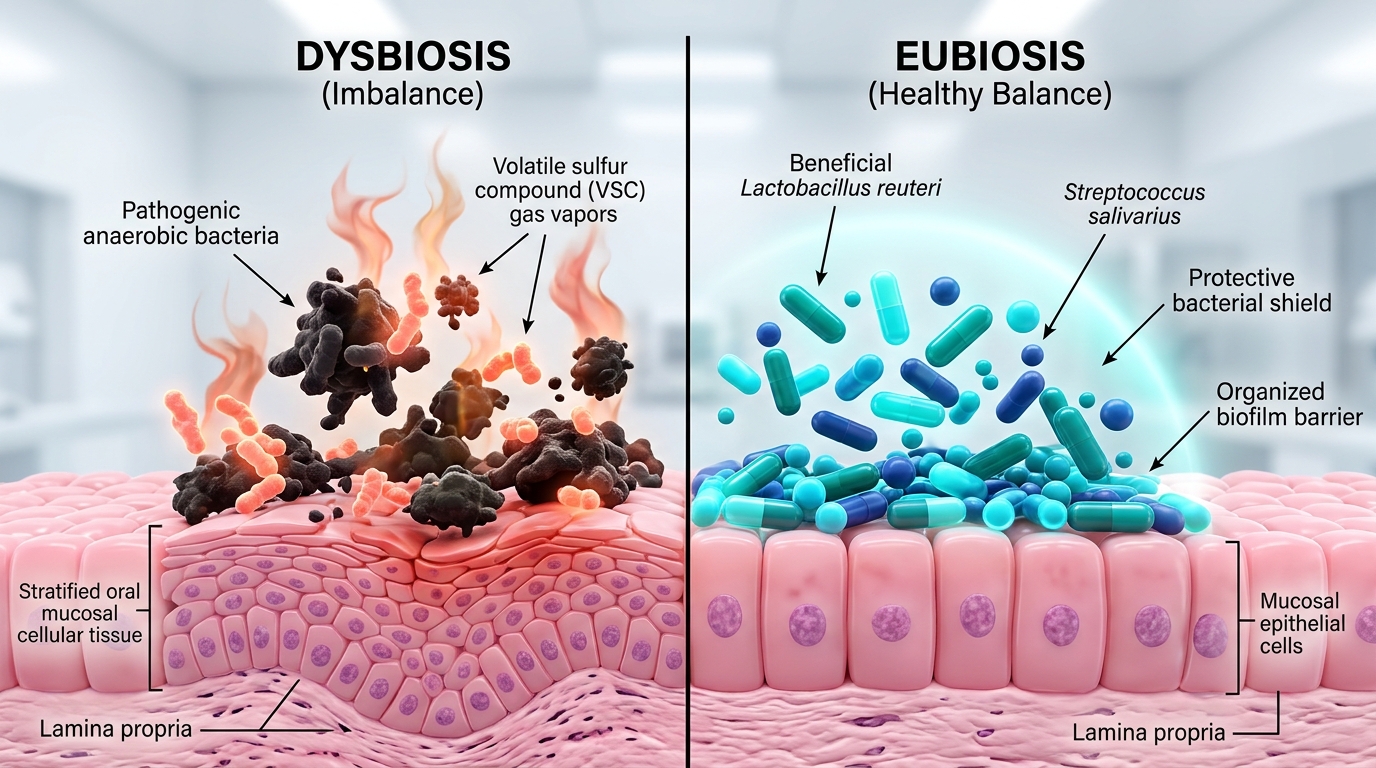
When beneficial oral bacteria like Streptococcus salivarius populate the tongue surface, they naturally compete against overgrowth of Candida albicans and sulfur-producing anaerobes.
Essential Dental Care Notice: oral concerns
Supplements and oral probiotics are exploratory adjuncts, not primary clinical treatments. They cannot reverse deep periodontal pockets, remove calcified tartar, or cure active dental infections. If you experience persistent bleeding, severe bad breath lasting weeks, or oral pain, schedule an in-person evaluation with a licensed dental professional.
Scientific Sources & Evidence References
Our editorial desk validates medical statements using peer-reviewed dental literature, clinical trials, and clinical consensus guidelines.
- Tongue coating: its characteristics and role in oral health
- Oral candidiasis: pathogenesis, clinical presentation, and diagnosis
Spot an error or outdated supplement fact? We prioritize scientific accuracy. Submit a correction or editorial feedback →