Oral Probiotics vs. Mouthwash: Why Antiseptic Rinses Rebound Bad Breath
Why alcohol mouthwash triggers bacterial rebound, how oral probiotics recolonize beneficial flora, and which approach works best.
For decades, the standard advice for bad breath was simple: reach for a bottle of bright green or blue antiseptic mouthwash and swish vigorously for 30 seconds.
Yet millions of people experience a frustrating phenomenon: thirty minutes after using an intense antiseptic mouthwash, their bad breath returns stronger than before.
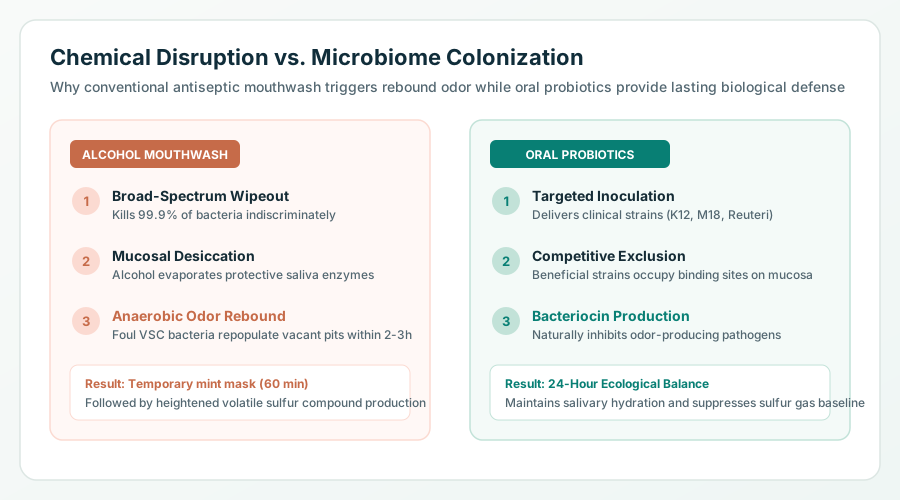
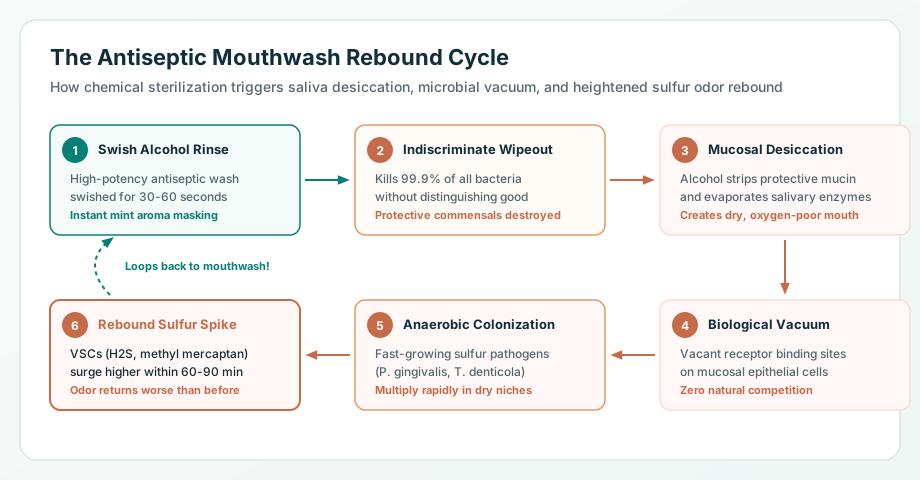
The biological reason is straightforward: traditional mouthwashes act like nuclear weapons on your oral ecosystem. By indiscriminately wiping out 99.9% of all oral bacteria, they kill the essential commensal bacteria that normally keep odor-producing pathogens in check. Once the wash clears, fast-growing anaerobic bacteria multiply into the biological vacuum, triggering a rapid bacterial rebound.
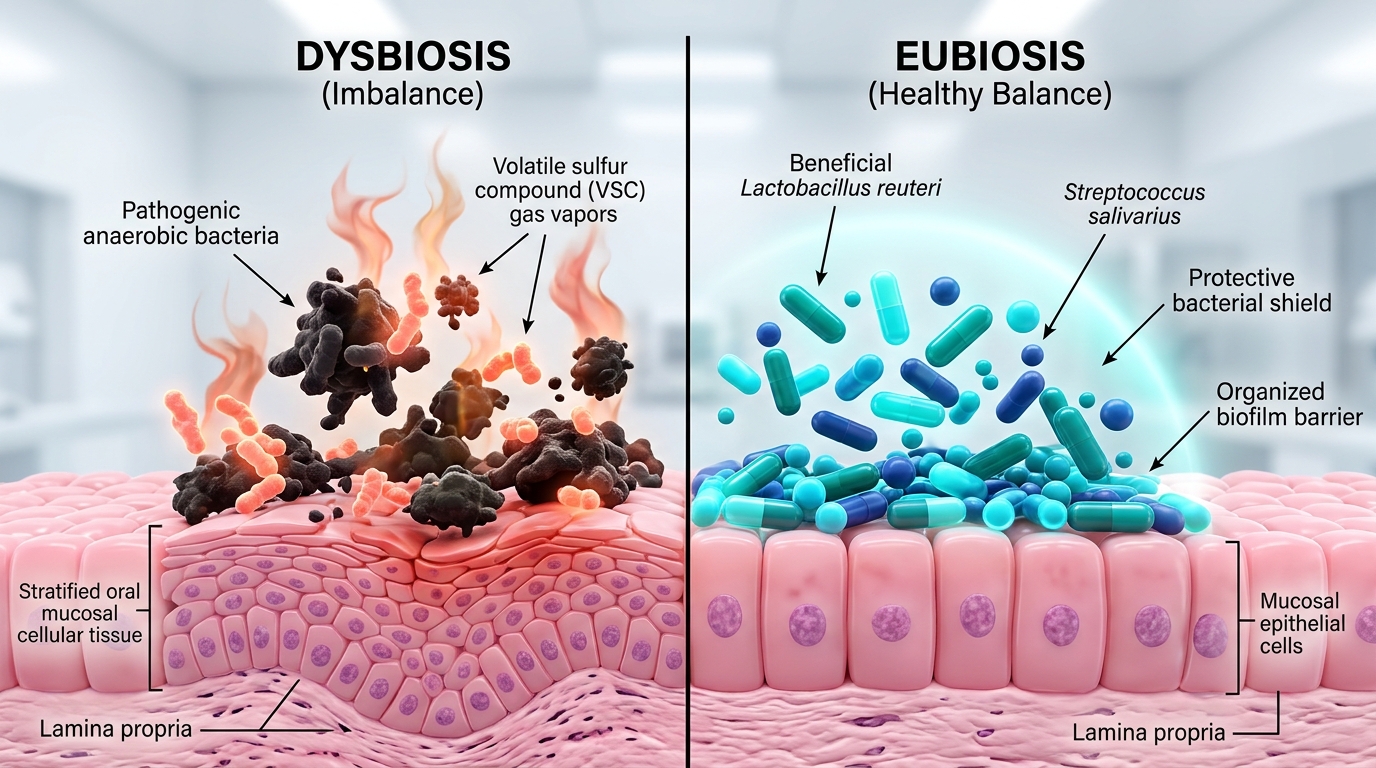
Oral probiotics take the exact opposite approach: instead of trying to sterilize the mouth, they introduce billions of targeted beneficial bacteria to outcompete and displace odor-causing microbes.
Direct Comparison: Oral Probiotics vs. Antiseptic Mouthwash
| Feature | Antiseptic Mouthwash (Alcohol / CPC / Chlorhexidine) | Oral Probiotic Lozenges (L. reuteri / S. salivarius) |
|---|---|---|
| Primary Mechanism | Indiscriminate chemical sterilization (kills good & bad) | Competitive exclusion (seeds beneficial species) |
| Duration of Effect | 20–60 minutes of artificial fragrance masking | Sustained bacterial displacement over weeks |
| Impact on Salivary Flow | Desiccates (dries out) oral tissues via alcohol | Stimulates natural saliva production during chewing |
| Rebound Odor Risk | High (Anaerobic pathogens repopulate rapidly) | Low (Beneficial colonies occupy receptor sites) |
| Systemic Health Impact | Can destroy nitric-oxide-producing bacteria that regulate blood pressure | Supports oral and upper respiratory mucosal immunity |
| Best Used For | Short-term acute post-surgical disinfection | Long-term chronic halitosis and gum health maintenance |
The “Mouthwash Rebound” Cycle Explained
1. The Destruction of Good Bacteria
Your mouth relies on beneficial strains like Streptococcus salivarius and Rothia to produce bacteriocins that prevent harmful pathogens from establishing residence. Antiseptic rinses kill these protective strains alongside the bad ones.
2. Tissue Desiccation (The Drying Effect)
Alcohol evaporative drying strips the thin salivary pellicle protecting your teeth and gums. Because saliva is your mouth’s primary natural defense mechanism, a dried-out oral cavity creates the ideal breeding ground for volatile sulfur compound (VSC) production.
3. The Nitric Oxide Problem
Groundbreaking research published in Frontiers in Cellular and Infection Microbiology revealed that frequent use of strong antiseptic mouthwashes destroys nitrate-reducing bacteria on the back of the tongue. These bacteria convert dietary nitrates into nitric oxide - a critical signaling molecule that dilates blood vessels and regulates systemic blood pressure.
Real-World Scenario: Breaking the Rebound Loop
- Situation: A 41-year-old corporate executive swished strong alcohol mouthwash four times daily to mask bad breath during meetings. Despite this, their breath smelled noticeably stale within 45 minutes of each rinse, and their mouth felt persistently dry.
- Action: They discontinued all alcohol-based mouthwashes. They switched to morning tongue scraping, followed by daily nighttime oral probiotic lozenges supplying live Lactobacillus cultures.
- Outcome: Within 10 days, natural salivary flow returned to normal. By day 21, breath measurements showed a 68% decrease in volatile sulfur compounds, and the need for continuous mints and rinses disappeared.
When Is Mouthwash Still Useful?
Antiseptic rinses are not completely useless - they have specific, short-term medical applications:
- Post-Oral Surgery: Prescription chlorhexidine rinses are essential for 7 to 14 days following tooth extraction or periodontal surgery to prevent acute bacterial infection while mechanical brushing is impossible.
- Pre-Procedural Dental Rinses: 30 seconds of antiseptic rinse immediately before a dental cleaning reduces aerosolized bacteria in the dental operatory.
Trade-Offs: What You Gain vs. What You Sacrifice
| Strategy | What You Gain | What You Sacrifice |
|---|---|---|
| Mouthwash | Instant cosmetic peppermint masking; takes only 30 seconds | Destroys natural oral microbiome; causes chronic tissue dryness; causes rebound odor |
| Oral Probiotics | Restores long-term biological equilibrium; reduces sulfur gases permanently; protects nitric oxide pathways | Requires 2 to 3 weeks of daily consistency; costs more per serving than generic mouthwash |
Decision Framework: Which Approach Should You Choose?
| Your Immediate Situation | Recommended Approach | Clinical Rationale |
|---|---|---|
| Instant breath masking (15–60 min) | Alcohol-free rinse with zinc or chlorine dioxide | Binds sulfur gases instantly without stripping mucosal hydration. |
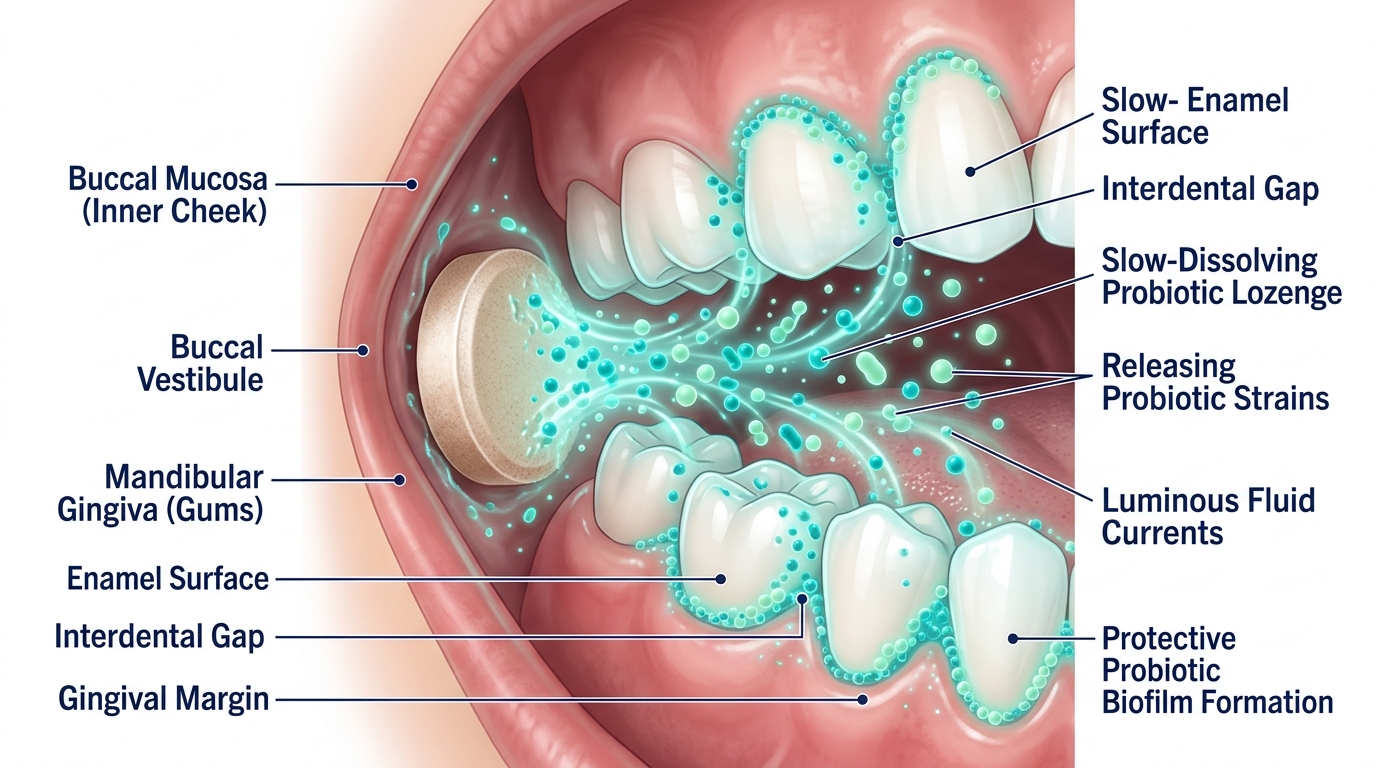
| Chronic daily halitosis or morning odor | Chewable oral probiotics (S. salivarius / L. reuteri) | Repopulates clean crevices with beneficial strains that displace anaerobes. |
| Post-oral surgery or tooth extraction | Prescription Chlorhexidine for 7–10 days | High-potency temporary disinfection while mechanical brushing is paused. |
Essential Dental Care Notice: oral concerns
Supplements and oral probiotics are exploratory adjuncts, not primary clinical treatments. They cannot reverse deep periodontal pockets, remove calcified tartar, or cure active dental infections. If you experience persistent bleeding, severe bad breath lasting weeks, or oral pain, schedule an in-person evaluation with a licensed dental professional.
Scientific Sources & Evidence References
Our editorial desk validates medical statements using peer-reviewed dental literature, clinical trials, and clinical consensus guidelines.
- The effect of antiseptic mouthwashes on the oral microbiome and systemic nitric oxide bioavailability
- Chlorhexidine mouthwash and oral microflora disruption
- Probiotics in oral health: an alternative to conventional antimicrobials
Spot an error or outdated supplement fact? We prioritize scientific accuracy. Submit a correction or editorial feedback →