What Are Oral Probiotics? Microbiome Science & How They Work
Discover how oral probiotics differ from digestive gut supplements, which bacterial strains colonize the mouth, and what the latest clinical research reveals.
When most people hear the word probiotic, they picture yogurt, kefir, or capsules designed to support the lower digestive tract. However, the human mouth harbors its own complex ecosystem - known as the oral microbiome - comprising more than 700 distinct taxa of bacteria, fungi, and viruses living in equilibrium.
Oral probiotics are live microorganisms that, when administered in adequate amounts, colonize oral tissues (such as the tongue dorsum, gingival crevices, and buccal mucosa) to confer a health benefit specifically within the oral cavity.
Unlike digestive probiotics intended to survive the harsh acidity of the stomach and colonize the small and large intestines, oral probiotics must be delivered directly to oral surfaces. They typically take the form of chewable tablets, dissolvable lozenges, or powders that allow beneficial species prolonged contact with teeth, gums, and oral mucosal biofilms.
Oral vs. Gut Probiotics: What Is the Difference?
A common point of confusion is whether taking a standard gut probiotic capsule will benefit bad breath or gum health.
When you swallow a sealed enteric capsule, the bacteria bypass the mouth entirely. They dissolve in the intestines to support gut motility, immune signaling, and digestion. However, they do not establish residency on your tongue or teeth.
| Characteristic | Gut Probiotics | Oral Probiotics |
|---|---|---|
| Primary Target | Intestines & Colon | Tongue, Teeth, Gum margins, Cheeks |
| Delivery Mechanism | Swallowed capsules, powders | Chewable lozenges, melting tablets, rinses |
| Key Bacterial Genera | Lactobacillus acidophilus, Bifidobacterium longum | Streptococcus salivarius (K12/M18), L. reuteri, L. paracasei |
| Primary Goal | Gut barrier function & digestion | Displacing odor-causing & cariogenic bacteria |
| Contact Time Needed | Immediate swallow | 2–5 minutes of prolonged oral contact |
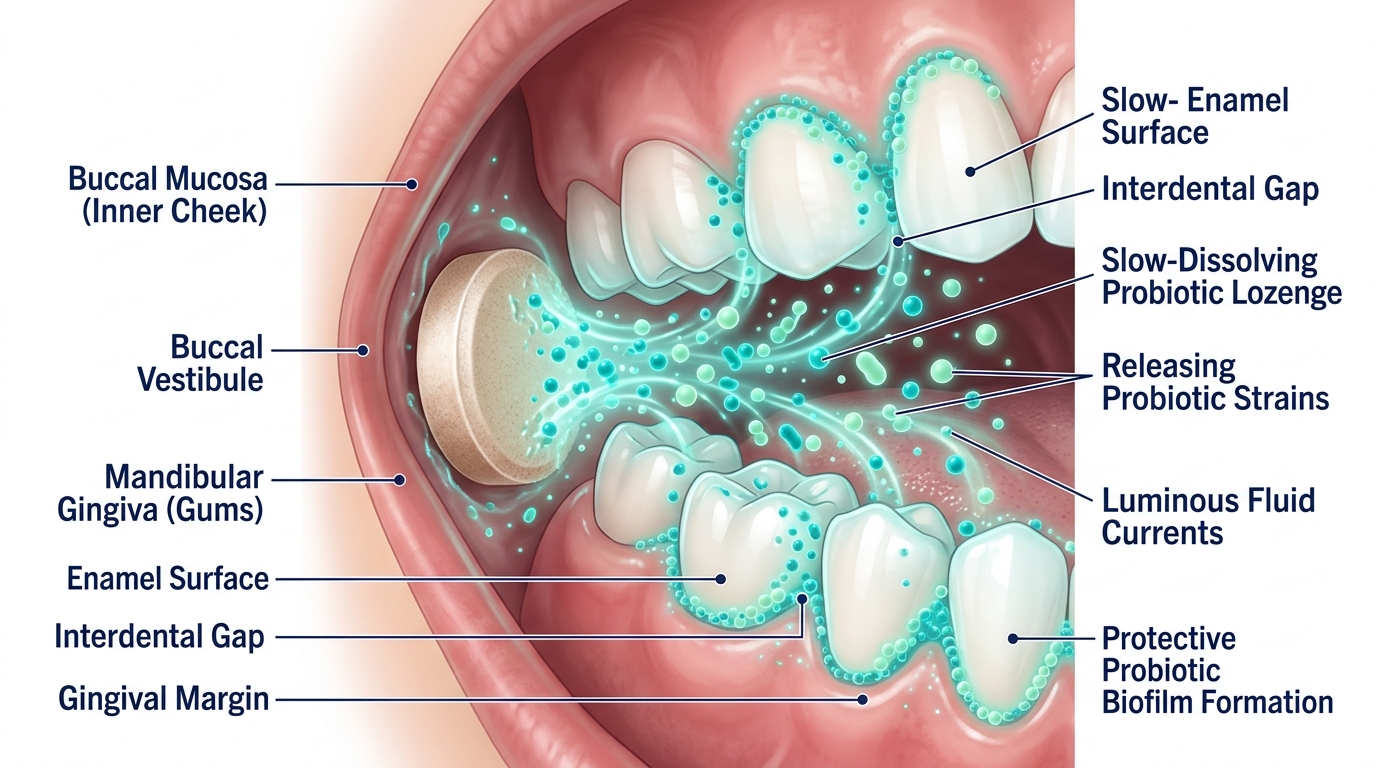
How Oral Probiotics Work: Three Key Mechanisms
Beneficial oral microbes operate through several biochemical mechanisms:
1. Competitive Adhesion & Niche Occupation
Beneficial strains adhere to oral epithelial cells and pellicle-coated enamel. By occupying cellular receptor sites, they physically block opportunistic pathogens - such as Streptococcus mutans (cavity-associated) and Porphyromonas gingivalis (periodontal-associated) - from anchoring and forming aggressive pathogenic biofilms.
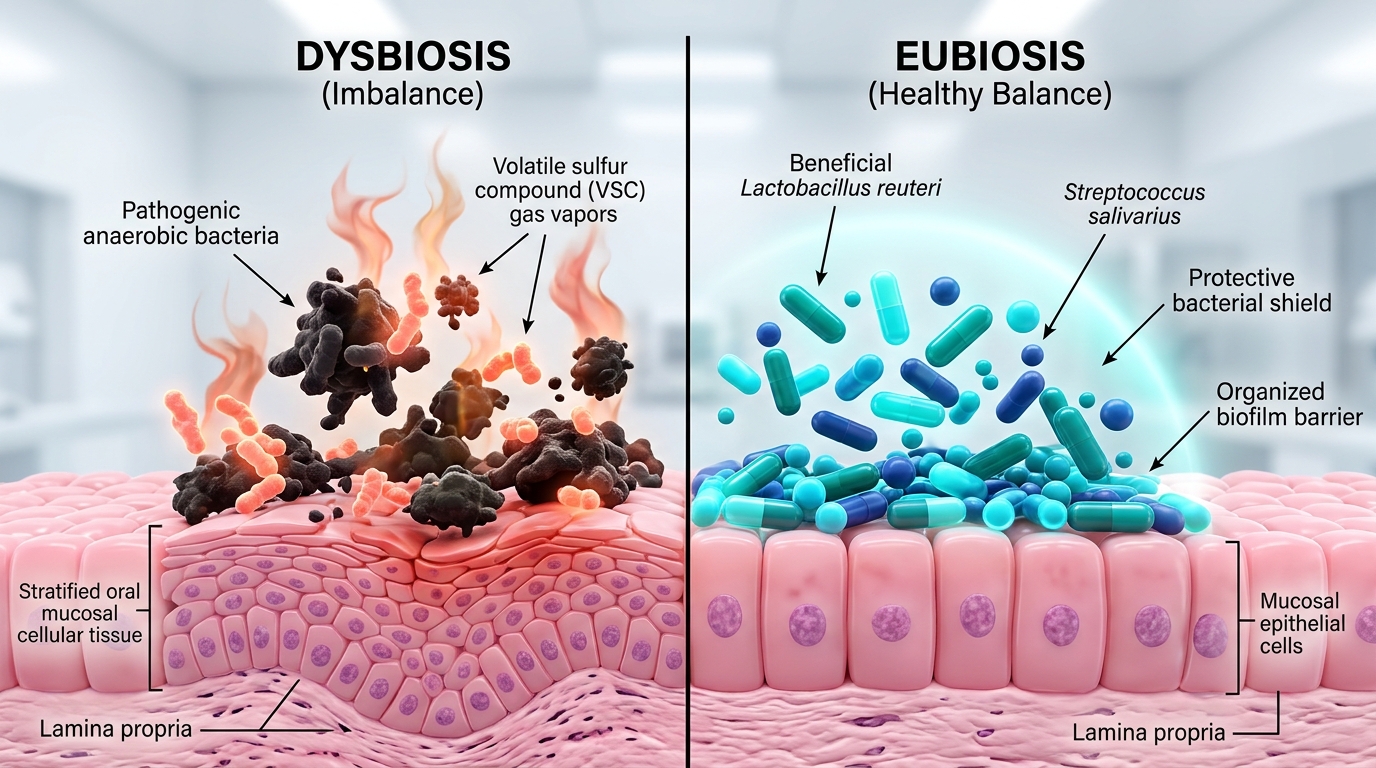
2. Bacteriocin Production (Targeted Antimicrobial Peptides)
Specific oral strains, notably Streptococcus salivarius K12 and M18, naturally produce inhibitory proteins known as bacteriocins (such as Salivaricin A2 and Salivaricin B). These antimicrobial peptides specifically inhibit the growth of bacteria responsible for oral malodor and pharyngeal infections, without broadly wiping out all oral flora like broad-spectrum alcohol mouthwashes do.
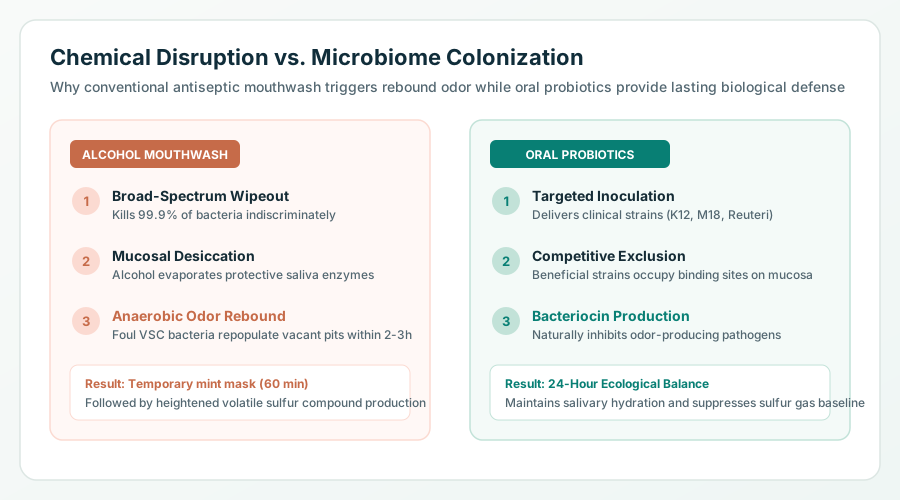
3. Modulation of Oral pH and Volatile Sulfur Compounds (VSCs)
Certain beneficial bacteria produce organic acids and enzymes that neutralize the alkaline conditions preferred by proteolytic anaerobes. When proteolytic bacteria on the back of the tongue are suppressed, their production of hydrogen sulfide and methyl mercaptan - the primary chemical compounds causing bad breath - drops noticeably.
Key Strains Studied in Oral Health Literature
Not all bacterial strains are created equal. Probiotic benefits are strictly strain-specific, not genus-specific:
- Streptococcus salivarius K12: Extensively researched for reducing volatile sulfur compounds and preventing upper respiratory bacterial blooms.
- Streptococcus salivarius M18: Evaluated for producing urease enzymes that moderate plaque pH and dextranase enzymes that help break down dental plaque structure.
- Lactobacillus reuteri (e.g. DSM 17938 / ATCC PTA 5289): Extensively investigated in clinical trials for adjunctive support in gingivitis and gum inflammation reduction.
- Lactobacillus paracasei: Evaluated for biofilm competition against cariogenic species.
Realistic Expectations: What Oral Probiotics Cannot Do
While oral probiotics represent a fascinating frontier in preventative dental wellness, they are not magic bullets:
- They cannot remove tartar (calculus): Once bacterial plaque mineralizes into rock-hard tartar, only a registered dental hygienist using ultrasonic and manual scaling tools can safely remove it.
- They cannot cure periodontitis: Deep periodontal disease requires clinical debridement, pocket measurement, and professional intervention.
- They do not replace mechanical cleaning: Brushing for two minutes twice daily and cleaning between teeth daily remain the non-negotiable foundation of oral health.
Essential Dental Care Notice: oral concerns
Supplements and oral probiotics are exploratory adjuncts, not primary clinical treatments. They cannot reverse deep periodontal pockets, remove calcified tartar, or cure active dental infections. If you experience persistent bleeding, severe bad breath lasting weeks, or oral pain, schedule an in-person evaluation with a licensed dental professional.
Scientific Sources & Evidence References
Our editorial desk validates medical statements using peer-reviewed dental literature, clinical trials, and clinical consensus guidelines.
- The oral microbiome: an overview for clinicians
- Role of Probiotics in Oral Health: An Update
- Competitive exclusion of pathogens by oral commensal Streptococcus species
Spot an error or outdated supplement fact? We prioritize scientific accuracy. Submit a correction or editorial feedback →