The Ultimate 5-Step Protocol for Persistent Bad Breath (That Brushing Won't Fix)
Why brushing and mouthwash fail to cure persistent halitosis, and the exact clinical 5-step daily routine that neutralizes all six anatomical odor reservoirs.
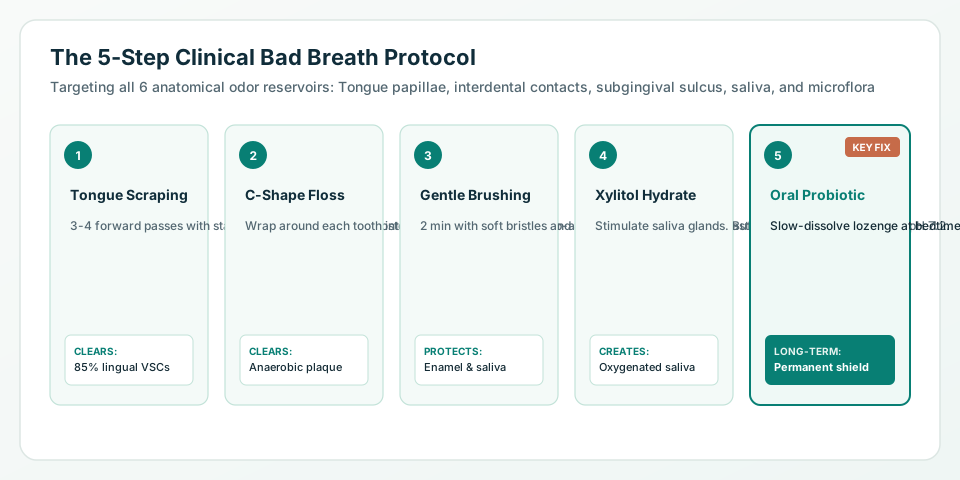
Direct Answer: Persistent bad breath (chronic halitosis) cannot be eliminated by toothbrushing alone because over 85% of oral volatile sulfur compounds (VSCs) originate in anatomical zones a toothbrush cannot effectively reach: the deep posterior tongue dorsum (filiform papillae), interdental contact points, subgingival pockets, and cryptic tonsils. The only clinically proven protocol that permanently stops chronic mouth odor is a 5-step mechanical disruption and microbial recolonization system: (1) scrape the tongue dorsum with a stainless steel U-scraper, (2) disrupt interproximal plaque with C-shape flossing, (3) brush gently with non-foaming SLS-free toothpaste, (4) hydrate with salivary stimulators (xylitol), and (5) dissolve a targeted oral probiotic lozenge before bed to repopulate clean microscopic crypts with protective bacteria.
Why Typical “Brush & Mouthwash” Routines Fail Every Time
If you brush your teeth three times a day, use blue antibacterial mouthwash, chew mint gum, and still notice a foul taste or sour odor within two hours, you are caught in the Antiseptic Rebound Trap.
Tooth enamel represents only approximately 20% of your mouth’s surface area. The remaining 80% consists of mucosal tissue, the tongue, the palatal surface, and interdental gaps.
When you rinse with conventional alcohol mouthwash:
- It kills beneficial commensal bacteria along with pathogens.
- The high alcohol content (often 18% to 26%) evaporates saliva and parches the oral mucosa.
- Rapid anaerobic bacteria - particularly Porphyromonas gingivalis, Treponema denticola, and Tannerella forsythia - recolonize the bone-dry mucosal pits faster than friendly organisms.
- Within 120 minutes, your breath smells worse than before you rinsed.
To break this cycle, you must shift from chemical warfare to mechanical debridement plus microbial repopulation.
The 5-Step Morning & Night Halitosis Elimination Protocol
Step 1: Posterior Lingual Debridement (Tongue Scraping)
Your tongue is not a smooth slab of muscle; it is covered with microscopic, carpet-like carpet fibers called filiform papillae. In chronic halitosis sufferers, these papillae become elongated, trapping dead white blood cells, food proteins, and billions of anaerobic sulfur-producing bacteria.
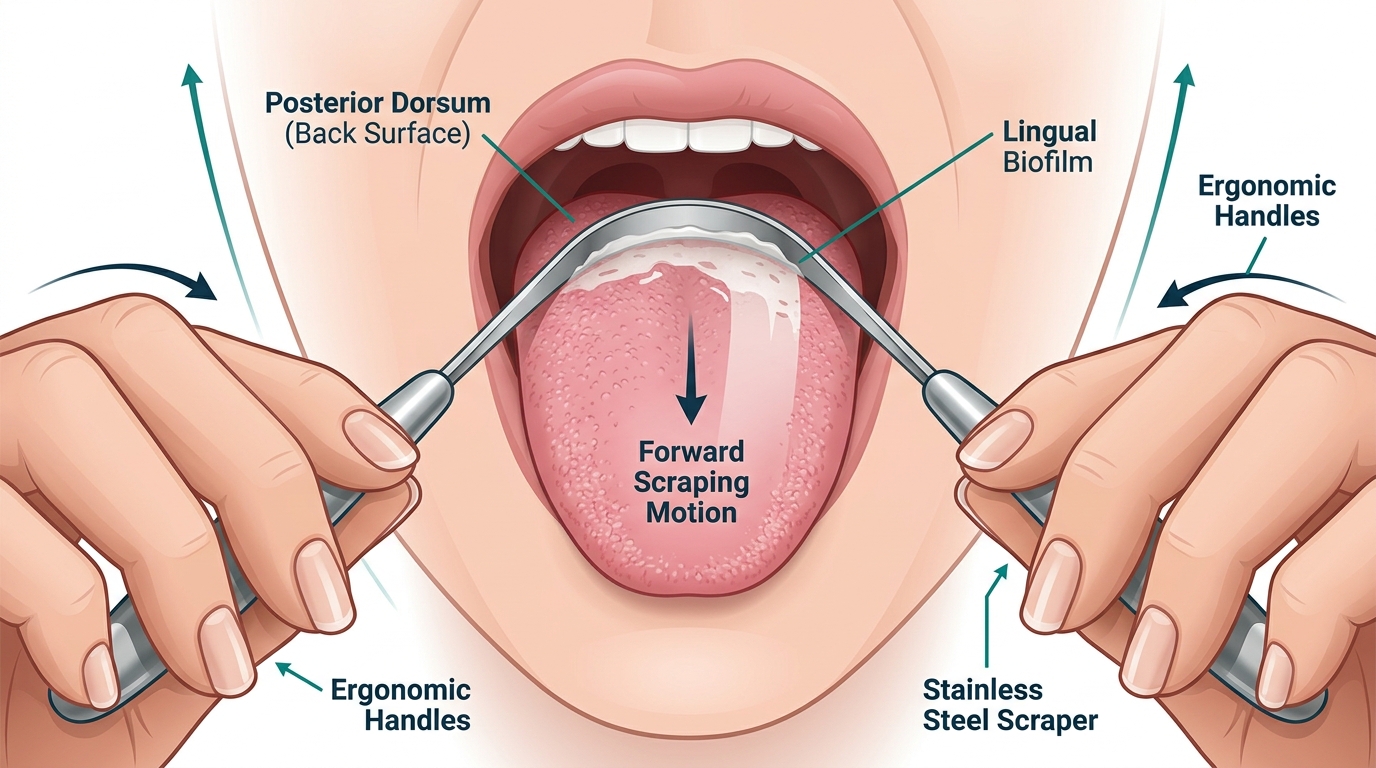
- How to do it: Use a curved stainless steel U-shaped tongue scraper. Reach to the posterior third of the tongue dorsum. Exhale through your mouth to silence the gag reflex, apply gentle firm pressure, and sweep forward toward the tip. Rinse the thick white or yellowish slime under running water. Repeat 3 to 4 times every morning and evening.
Step 2: Mechanical Interdental Shearing (C-Shape Floss)
Plaque trapped between molars has zero exposure to oxygen. In this anaerobic environment, bacteria digest cysteine and methionine proteins, generating hydrogen sulfide (rotten egg odor) and methyl mercaptan (fecal/cabbage odor).
- How to do it: Wrap 18 inches of unwaxed or expanding floss around your middle fingers. Guide the floss between teeth, curve it tightly against one tooth into a “C-shape”, slide 2mm under the gumline, and scrape upwards 4 times. Repeat on the adjacent tooth face before moving to the next contact.
Step 3: Gentle SLS-Free Enamel Brushing
Sodium Lauryl Sulfate (SLS) is a harsh foaming detergent found in 90% of commercial toothpastes. Research indicates SLS strips the oral protective mucin layer and increases mucosal sloughing, providing more protein fuel for sulfur bacteria.
- How to do it: Brush for two full minutes using an ultra-soft bristle brush held at a 45-degree angle to the gumline (Bass technique). Use an SLS-free, low-abrasion fluoride or hydroxyapatite toothpaste. Spit out the foam, but avoid vigorously rinsing with water immediately - allow the active minerals to coat enamel.
Step 4: Salivary Stimulation & pH Buffering
Saliva is nature’s ultimate bad-breath antidote. It contains oxygen, secretory IgA antibodies, lysozyme, and bicarbonate buffers that keep oral pH above 7.0 (an alkaline/neutral zone where odor-causing anaerobes cannot thrive).
- How to do it: If your mouth feels dry or pasty during the day, chew 100% xylitol gum or suck on a xylitol mint after meals. Xylitol cannot be fermented into acid by bacteria, and the mastication stimulates parotid salivary flow.
Step 5: Bedtime Microbial Repopulation (The Critical Missing Step)
Mechanical scraping and flossing leave millions of microscopic crevices temporarily vacated. If you go to sleep without actively repopulating these niches, the residual anaerobic pathogens will multiply unchecked during the night’s natural salivary shutdown.
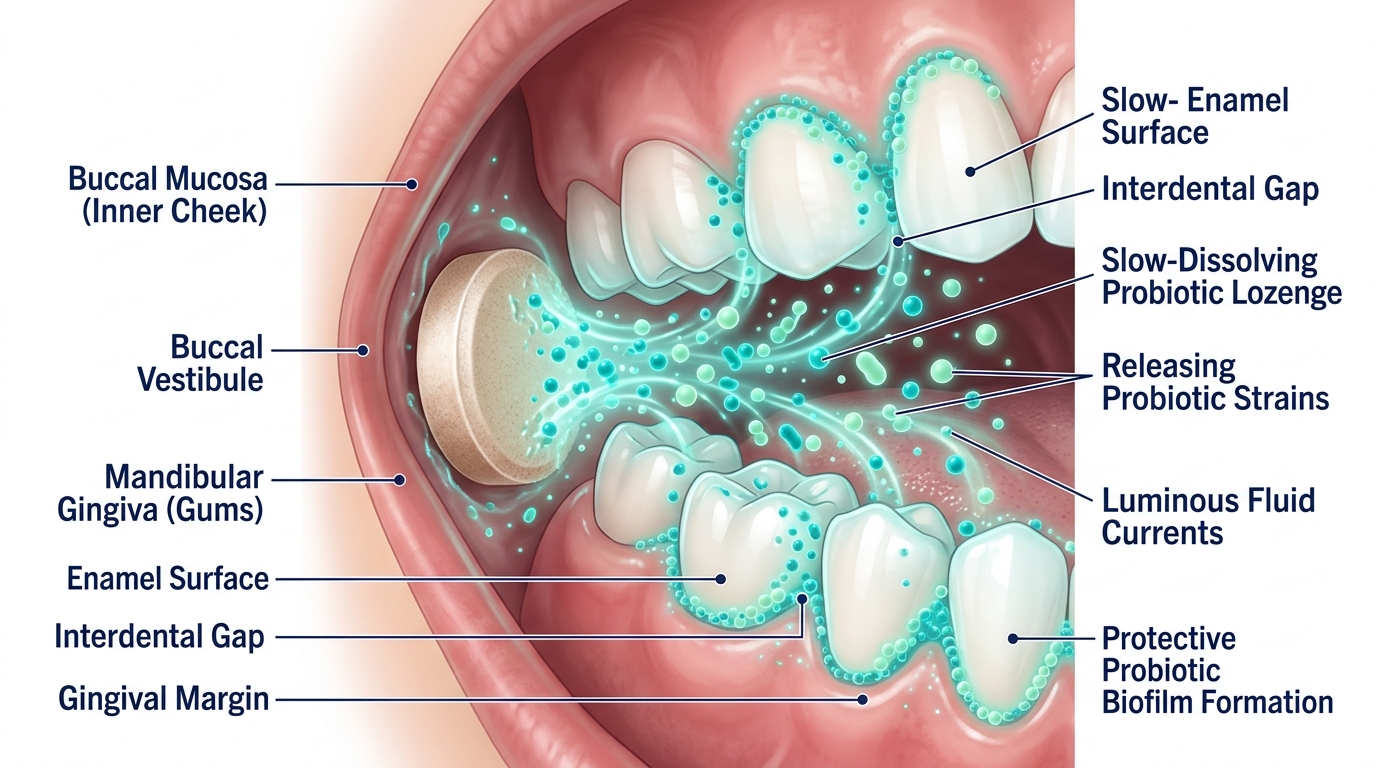
- How to do it: After completing steps 1 through 4 at bedtime, place a high-potency oral probiotic lozenge in your mouth (between cheek and gum or under the tongue). Let it dissolve slowly over 10 to 15 minutes. Do not eat, drink, or rinse afterwards. The live strains (Streptococcus salivarius K12, Lactobacillus reuteri, and L. paracasei) will attach to mucosal receptors and produce bacteriocins, keeping your breath clean until morning.
Timeline of Results: What to Expect
| Day Range | Biological Transformation | Expected Breath Outcome |
|---|---|---|
| Day 1–3 | Lingual biofilm thickness reduced by 70%. | Morning breath intensity decreases noticeably; metallic aftertastes vanish. |
| Day 4–7 | Interdental anaerobic pockets cleared; gum capillary bleeding subsides. | No odor detectable on floss; breath stays neutral 4+ hours after meals. |
| Day 8–14 | Probiotic colonization (S. salivarius) reaches critical density. | Tongue dorsum stays healthy pink throughout the day; afternoon “coffee breath” minimized. |
| Day 15–30 | Salivary buffering capacity stabilized; permanent ecological defense. | Consistent, odor-free confidence without reliance on mints or sprays. |
Essential Dental Care Notice: oral concerns
Supplements and oral probiotics are exploratory adjuncts, not primary clinical treatments. They cannot reverse deep periodontal pockets, remove calcified tartar, or cure active dental infections. If you experience persistent bleeding, severe bad breath lasting weeks, or oral pain, schedule an in-person evaluation with a licensed dental professional.
Scientific Sources & Evidence References
Our editorial desk validates medical statements using peer-reviewed dental literature, clinical trials, and clinical consensus guidelines.
- Management of Halitosis: A Systematic Review and Meta-Analysis of Microbial Interventions
- The Role of the Lingual Biofilm and Salivary Flow in Chronic Oral Malodor
- Clinical Efficacy of Streptococcus salivarius K12 in Volatile Sulfur Compound Suppression
Spot an error or outdated supplement fact? We prioritize scientific accuracy. Submit a correction or editorial feedback →