Why Does Floss Smell Bad? 5 Causes & How to Fix Interdental Odor
Discovered a foul smell on your floss? Learn why interdental anaerobic bacteria generate sulfur gases and how to stop interdental odor permanently.
If you pull dental floss from between your molars, take a quick sniff, and cringe at a smell reminiscent of rotting food, sulfur, or decay, you are not alone.
Floss smells bad because the tight contact area between adjacent teeth is an oxygen-deprived sanctuary where anaerobic bacteria ferment protein debris into volatile sulfur compounds (VSCs).
Toothbrush bristles clean only the outer, inner, and biting surfaces of teeth, leaving approximately 40% of the tooth structure untouched. When plaque sits undisturbed in interdental pockets for longer than 24 to 48 hours, bacterial putrefaction begins.
Key Takeaways: Interdental Odor at a Glance
- The Primary Culprit: Anaerobic proteolytic bacteria (P. gingivalis, T. forsythia, and F. nucleatum) break down trapped microscopic meat, dairy, and cellular debris into hydrogen sulfide and methyl mercaptan.
- The Golden Rule: The worse your floss smells, the more urgently you need to floss every single day; skipping flossing guarantees worsening sulfur buildup.
- The Two-Step Fix: Mechanically disrupt the biofilm with proper C-shape flossing, then biologically reseed the oral cavity with beneficial probiotic strains to prevent anaerobic re-colonization.
Problem → Cause → Fix Matrix
| Observed Floss Odor | Root Cause | Clinical Implication | Corrective Action |
|---|---|---|---|
| Rotten egg smell (Hydrogen Sulfide) | Decomposing food debris trapped for 24+ hours | Early interproximal bacterial biofilm accumulation | Floss daily using the wrap-around C-shape technique. |
| Fecal / decaying smell (Methyl Mercaptan) | Periodontal pocket infection beneath the gum margin | Advanced subgingival anaerobic colonization or tartar | Schedule professional periodontal probing and ultrasonic scaling. |
| Sharp sour or acidic smell | Acidic plaque fermenting carbohydrates | Active interproximal enamel demineralization (cavity) | Dental examination with bite-wing X-rays to check for interdental cavities. |
| Blood mixed with odor | Plaque-induced gingival capillary rupture | Active gingivitis | Continue gentle daily flossing; bleeding resolves in 7–10 days. |
5 Biological Reasons Your Floss Smells Foul
1. The Interdental Anaerobic Sanctuary
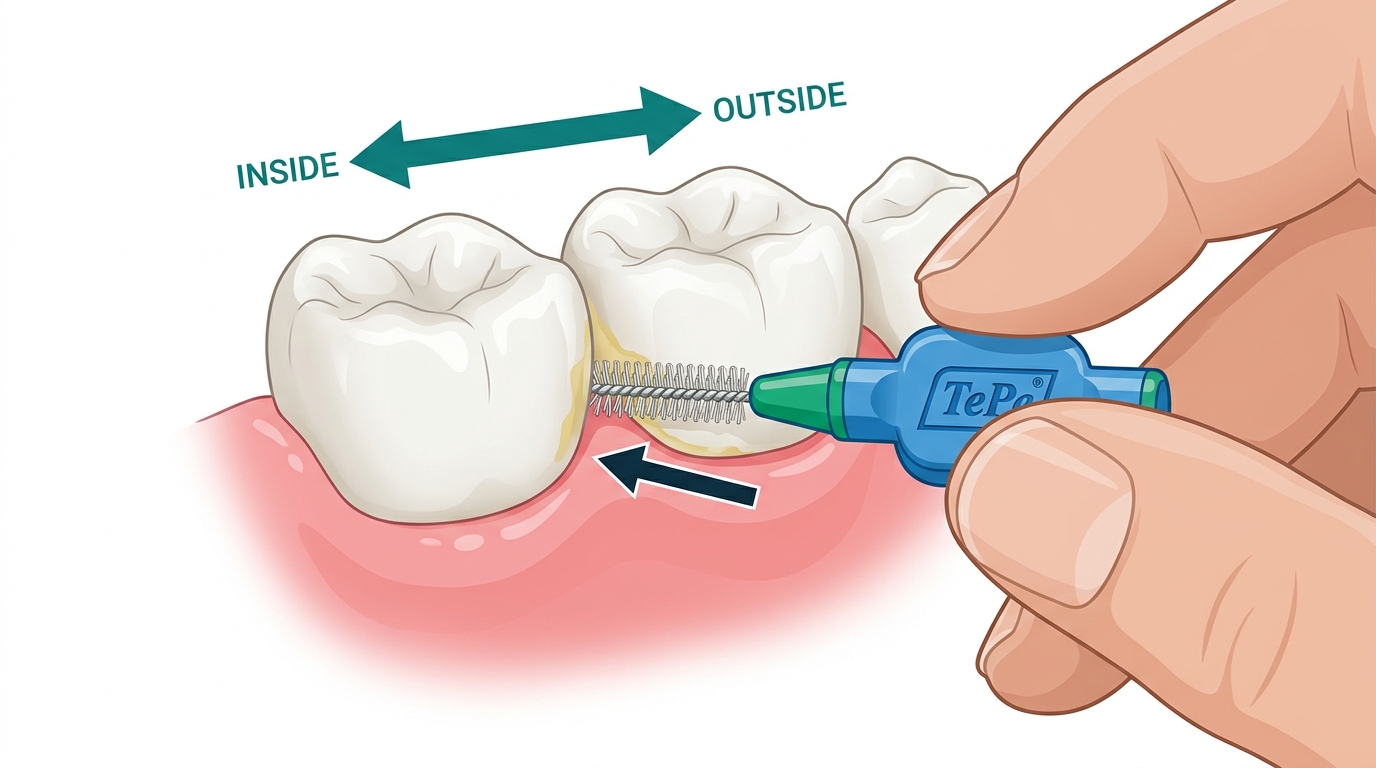
Anaerobic bacteria thrive specifically where there is zero oxygen, and the contact point between teeth is the lowest-oxygen environment in your mouth. When you chew, microscopic food fibers are forced between teeth into the interdental papilla crevice. Deprived of oxygen and untouched by toothbrush bristles, proteolytic bacteria produce sulfur byproducts that bind tightly to floss fibers.
2. Calcified Interdental Tartar (Calculus)
Plaque that remains undisturbed between teeth for more than 48 hours absorbs calcium and phosphate from your saliva, hardening into rock-like dental calculus. Calculus has a rough, microscopic coral-like texture that provides thousands of tiny caves where odor-causing bacteria hide permanently. Floss rubs against this rough tartar, picking up concentrated volatile gases.
3. Defective Restorations or Overhanging Fillings
A microscopic ledge on an old composite filling or dental crown traps food that no amount of standard brushing can dislodge. If your floss frequently shreds, catches, or snags on a specific tooth before coming out smelling terrible, you likely have an open margin or overhanging restoration harboring chronic rot.
4. Food Impaction from “Food Traps”
Slight misalignments or receding gums create small triangular gaps (black triangles) between tooth necks. Fibrous meats, seeds, and vegetable peels wedge tightly into these gaps. Within 12 hours, oral bacteria begin decomposing these proteins into cadaverine and putrescine - the exact chemical compounds associated with organic decomposition.
5. Hidden Interproximal Cavities
Tooth decay occurring between two teeth dissolves the enamel beneath the contact point, creating a hollow, decaying cavity reservoir. Because you cannot see between your teeth in the mirror, this bacterial decay rots quietly, releasing a foul odor on floss long before you feel physical tooth pain.
Real-World Scenarios: How Interdental Odor Develops & Resolves
Scenario 1: The “Infrequent Flosser” Trap
- Situation: A 34-year-old flosser only cleans between teeth once a week. Every time they floss, the floss smells offensive and their gums bleed, leading them to assume flossing is damaging their gums.
- Action: They commit to gentle daily flossing for 14 days straight and switch to an unflavored woven floss to maximize surface contact.
- Outcome: By day 8, gum bleeding stops completely. By day 12, the foul sulfur scent on the floss is entirely gone as the bacterial load drops below the threshold of olfactory detection.
Scenario 2: The Chronic Single-Tooth Odor
- Situation: A patient notices that floss smells clean between their front teeth, but smells intensely rotten only between their upper right first and second molars.
- Action: They visit their dentist for a focused evaluation and bite-wing radiograph.
- Outcome: The X-ray reveals an overhanging composite filling that was catching food. The dentist polishes the margin smooth, eliminating the food trap permanently.
What Most People Get Wrong About Smelly Floss
[!WARNING] The #1 Misconception: Believing that if floss smells bad, you should stop flossing to “let your gums rest.” When floss smells bad, it is diagnostic proof that decaying biofilm is trapped in your gums right now. Stopping flossing accelerates bone loss and pocket deepening. Gums bleed and smell because they are infected with plaque - not because flossing injured them.
Decision Framework: How to Fix Smelly Floss
| Odor Location & Floss Behavior | Likely Root Cause | Proven Corrective Action |
|---|---|---|
| Smell occurs between all teeth | Generalized interdental plaque or mild gingivitis | Daily C-shape flossing + bedtime oral probiotic lozenges. |
| Smell occurs at one specific tooth only | Food trap, defective filling margin, or hidden cavity | Dental examination with localized bite-wing radiograph. |
| Floss shreds, catches, and smells rotten | Subgingival tartar ledge or fractured filling margin | Professional ultrasonic scaling and dental margin polishing. |
The 3-Step Protocol to Eliminate Floss Odor
Step 1: Master the “C-Shape” Flossing Technique
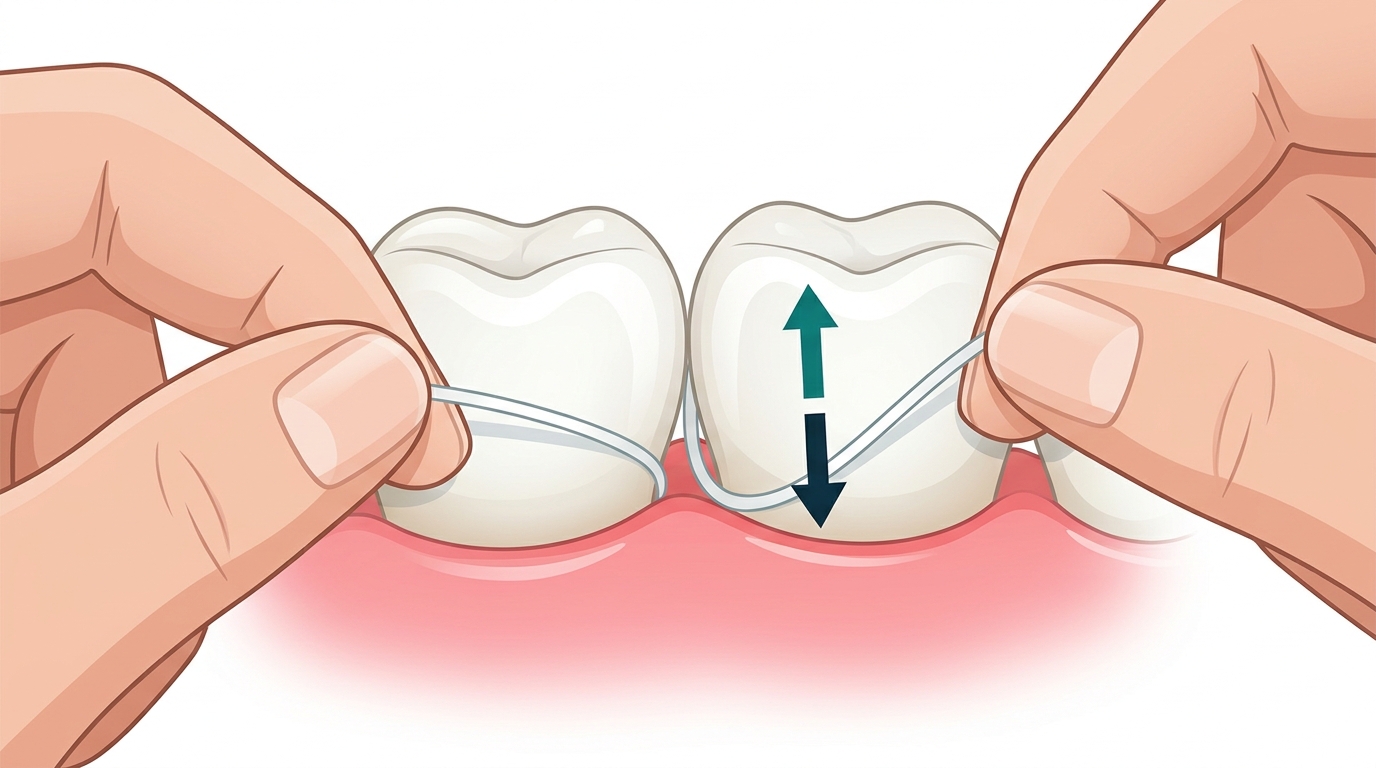
Never snap floss straight down onto your gum tissue. Hug the string around the side of the tooth in a “C” shape, gently slide it beneath the gumline until you feel light resistance, and scrape upward from gum to crown 3 to 4 times. Repeat on the adjacent tooth face using a clean section of string.
Step 2: Use Woven Floss or Pair with Hydraulic Irrigation
Smooth monofilament (PTFE) floss slides easily between tight teeth, but textured woven floss expands in saliva like a tiny sponge, grabbing and lifting significantly more microscopic plaque out of the sulcus pocket. If you have deep pockets or restorations, combining string friction with water irrigation delivers comprehensive clearance.

Step 3: Biologically Reseed with Oral Probiotics
Mechanical flossing removes the physical bacterial mass, but microscopic crevices remain empty. If you do nothing, fast-growing anaerobic pathogens will repopulate the pocket within 8 to 12 hours. Sucking on an oral probiotic chewable before bed introduces billions of beneficial bacteria (L. reuteri and L. paracasei) that occupy those receptor sites, preventing sulfur-producing bacteria from reclaiming the territory.
When to See a Dentist
Seek professional dental care if:
- Floss continues to smell foul after 14 consecutive days of daily flossing.
- The odor is localized to a single tooth that is also sensitive to cold, hot, or sweet foods.
- Your gums remain swollen, red, or bleed spontaneously without touching.
- You notice a deep gap where food packs painfully every time you eat.
Essential Dental Care Notice: oral concerns
Supplements and oral probiotics are exploratory adjuncts, not primary clinical treatments. They cannot reverse deep periodontal pockets, remove calcified tartar, or cure active dental infections. If you experience persistent bleeding, severe bad breath lasting weeks, or oral pain, schedule an in-person evaluation with a licensed dental professional.
Scientific Sources & Evidence References
Our editorial desk validates medical statements using peer-reviewed dental literature, clinical trials, and clinical consensus guidelines.
- Microbiological analysis of the interdental space in healthy individuals and gingivitis patients
- Interdental cleaning: a prerequisite for oral health
- Volatile sulfur compounds in subgingival plaque samples
Spot an error or outdated supplement fact? We prioritize scientific accuracy. Submit a correction or editorial feedback →