How to Clean Teeth with Receding Gums Without Causing Further Damage
A gentle clinical cleaning protocol for receding gums, exposed tooth roots, and sensitive periodontal collars. Learn the correct brushing angles, interdental tools, and gum-strengthening probiotics.
Direct Answer: Cleaning teeth with receding gums requires abandoning aggressive scrubbing and adopting atraumatic, low-abrasion techniques to avoid carving notches (abfraction and cervical abrasion) into soft, exposed root dentin. The gold-standard clinical protocol involves: (1) an ultra-soft micro-bristle toothbrush held at a 45-degree angle toward the gumline using gentle circular or vibratory motions (Modified Bass Technique), (2) substituting abrasive whitening pastes for a low-RDA (Relative Dentin Abrasivity < 70) fluoride or nano-hydroxyapatite paste, (3) using silicone or sized interdental proxy brushes instead of snapping string floss into vulnerable collars, and (4) supporting mucosal tissue resilience with anti-inflammatory gum-targeted probiotics.
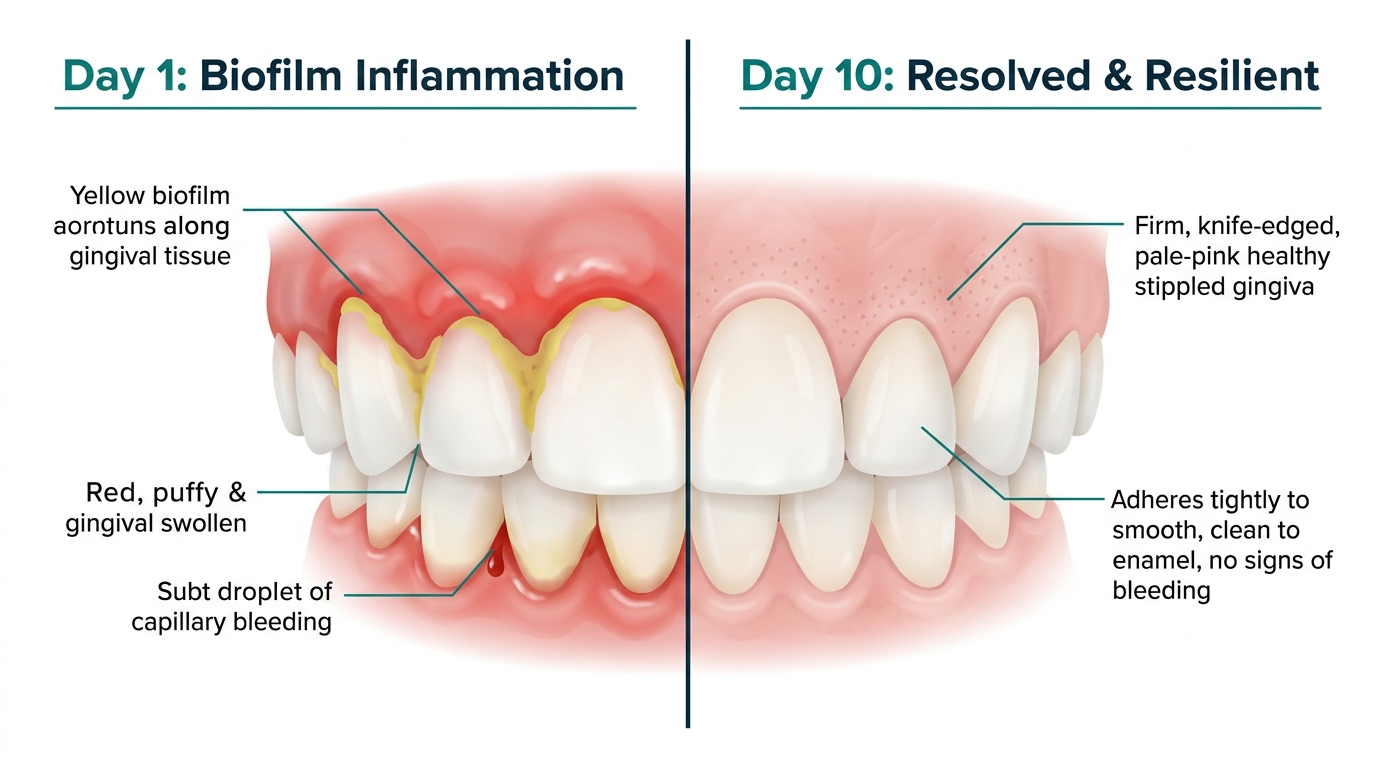
Why Receded Gums Require a Completely Different Cleaning Strategy
When healthy gums recede, they expose the anatomical cemento-enamel junction (CEJ) and root cementum. Unlike the crown of the tooth - which is shielded by hard, mineralized enamel - root surfaces consist of cementum and dentin, which are:
- Significantly softer: Dentin wears away up to 7 times faster than enamel under identical abrasive pressure.
- Microscopically porous: Dentin contains thousands of fluid-filled dentinal tubules connected directly to the tooth nerve pulp, causing intense sensitivity to cold, heat, and air.
- Prone to root caries: Root surfaces decay at a critical pH of 6.2 to 6.7 (compared to pH 5.5 for enamel), meaning even mildly acidic saliva causes demineralization.
Aggressive horizontal “sawing” with a medium or hard toothbrush can carve permanent V-shaped grooves (cervical wedge defects) into your roots in as little as 6 to 12 months.
The 4-Step Atraumatic Cleaning Protocol for Receding Gums
1. The Modified Bass Brushing Technique
Position your ultra-soft manual or sonic brush head at a 45-degree angle directed toward the gumline. The bristle tips should rest gently against both the tooth surface and the margin where the gum meets the tooth.
- Apply featherlight pressure (no more than the weight of an orange).
- Vibrate the brush in tiny 1–2mm back-and-forth circles without lifting the tips.
- Sweep the brush head upward (on lower teeth) or downward (on upper teeth) away from the gums.
- Never scrub horizontally back and forth.
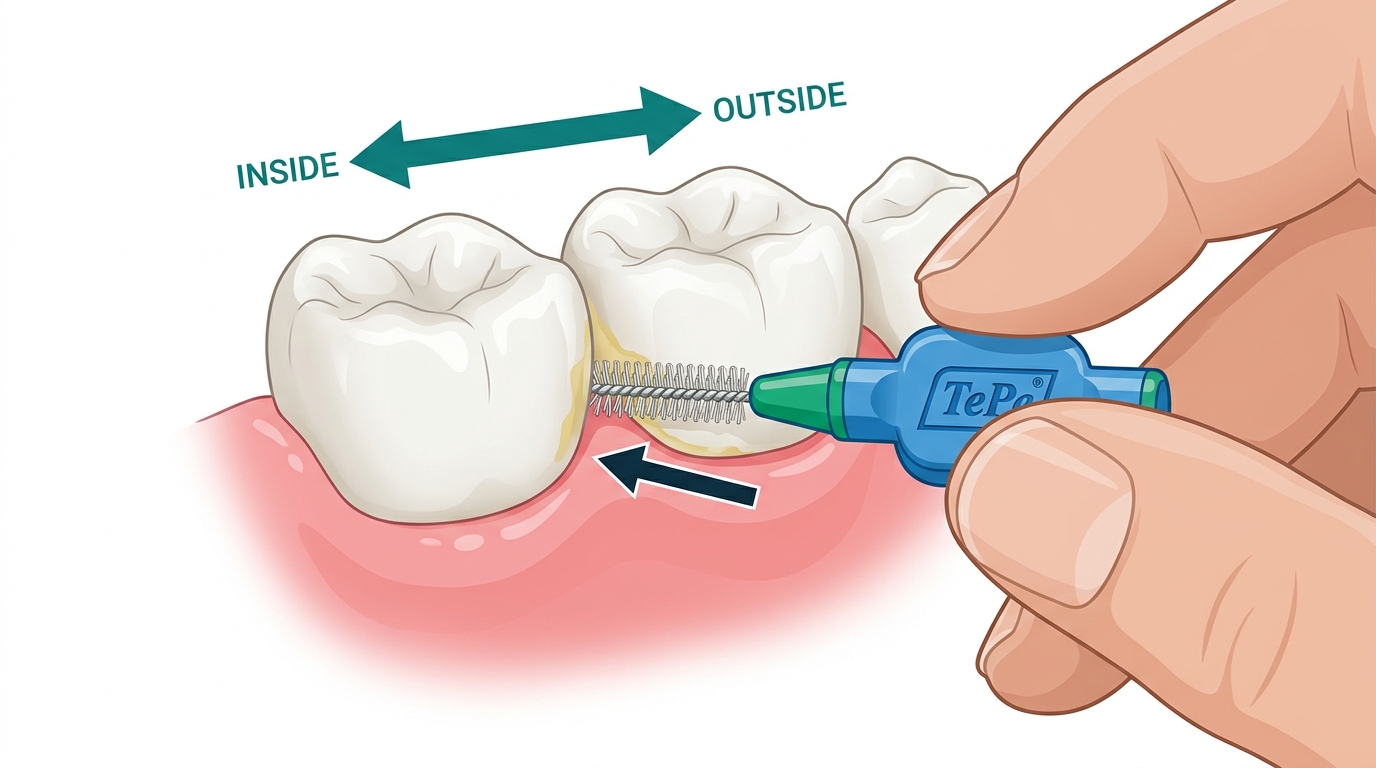
2. Sized Interdental Brushes over String Floss
As gingival tissue recedes, the triangular space between adjacent teeth (the interdental embrasure) widens, frequently leaving “black triangles.” Traditional string floss curves around flat surfaces, but it spans straight across concave root depressions, leaving plaque untouched in the root furrows.
- Select an interdental brush whose bristle diameter fits snugly into the space without forcing the wire against the teeth.
- Insert the brush horizontally at the gumline, push straight through to the other side, and withdraw once.
- Do not use abrasive toothpaste on interdental brushes - water or a soothing probiotic gel is ideal.
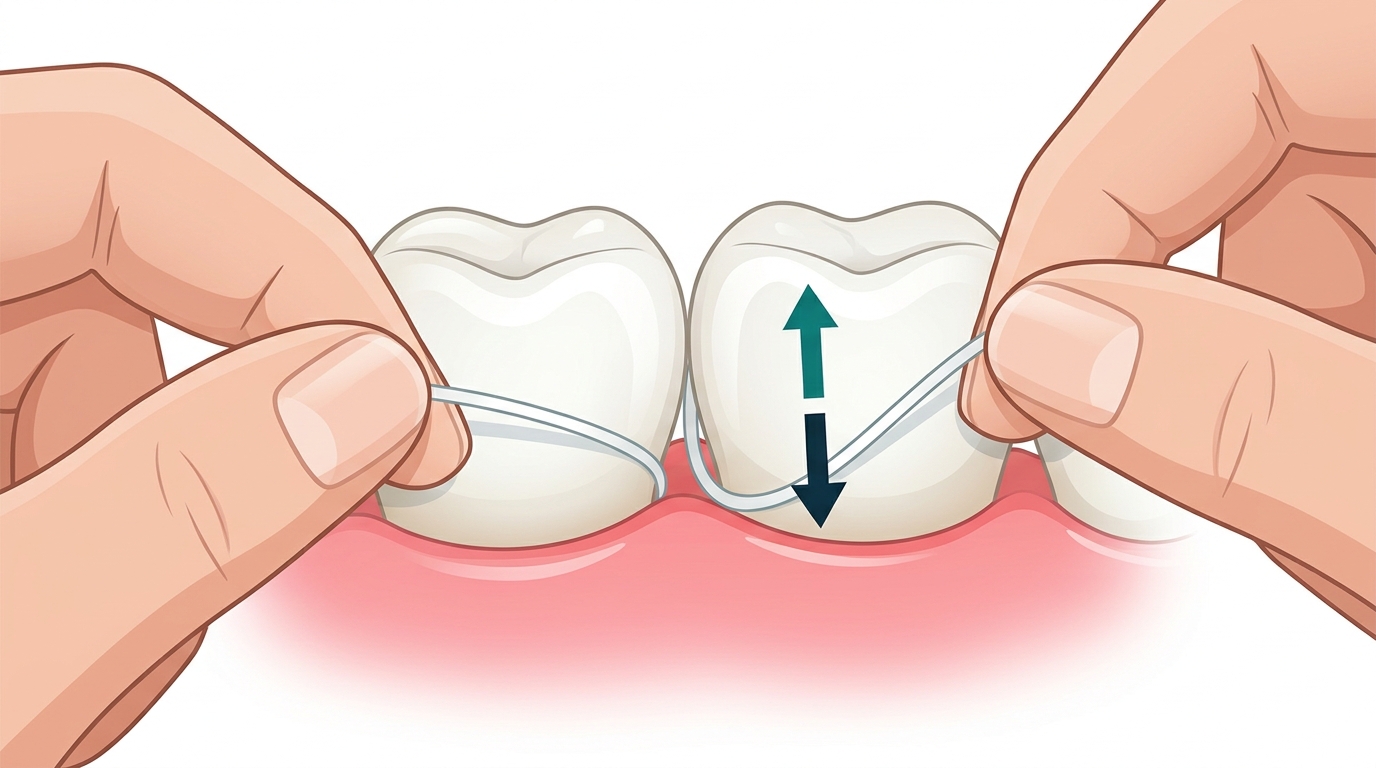
3. C-Shape String Floss Protocol for Tight Contacts
Where teeth remain tightly abutted and interdental brushes cannot fit without force, dental floss remains necessary. However, snapping floss down onto the receding gum margin can cause traumatic “floss clefts” that accelerate recession.
4. Switch to Low-RDA Pastes and Remineralizing Agents
Most commercial whitening toothpastes contain harsh silica abrasives with RDA scores exceeding 100 to 150. For exposed roots, look for toothpastes with an RDA under 70.
Look for remineralizing formulas containing nano-hydroxyapatite (nHAp) or potassium nitrate. Nano-hydroxyapatite particles physically plug open dentinal tubules, eliminating nerve sensitivity while reinforcing vulnerable root minerals.
Nutritional & Microbial Reinforcement for Gingival Tissue
Mechanical hygiene cleans the tooth surfaces, but tissue resilience also depends on local immune balance in the periodontal pocket. Chronic subclinical inflammation breaks down collagen fibers that anchor the gum to the bone.
Recent clinical studies in the Journal of Clinical Periodontology demonstrate that taking an oral probiotic lozenge containing Lactobacillus reuteri Prodentis significantly reduces pocket probing depths, bleeding on probing, and pro-inflammatory cytokines in vulnerable gingival pockets compared to placebo.
Essential Dental Care Notice: oral concerns
Supplements and oral probiotics are exploratory adjuncts, not primary clinical treatments. They cannot reverse deep periodontal pockets, remove calcified tartar, or cure active dental infections. If you experience persistent bleeding, severe bad breath lasting weeks, or oral pain, schedule an in-person evaluation with a licensed dental professional.
Scientific Sources & Evidence References
Our editorial desk validates medical statements using peer-reviewed dental literature, clinical trials, and clinical consensus guidelines.
- Etiology and Prevention of Gingival Recession: Mechanical vs Microbial Factors
- Subgingival Biofilm Management in Exposed Root Surfaces
- Adjunctive Use of Probiotic Lozenges in Non-Surgical Periodontal Therapy
Spot an error or outdated supplement fact? We prioritize scientific accuracy. Submit a correction or editorial feedback →