How to Clean Your Tongue Correctly: Scrapers vs. Brushes Compared
Why tongue scraping eliminates 75% more volatile sulfur compounds than brushing, the correct stroke technique, and how to prevent gagging.
If you only brush your teeth, you are leaving the primary source of morning breath and oral malodor completely untouched.
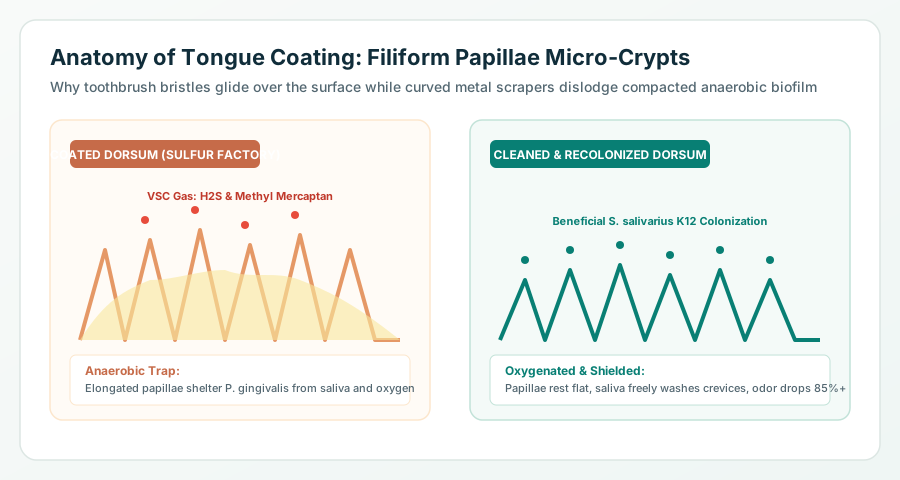
The posterior third of the tongue dorsum harbors over 80% of all odor-causing bacteria in the mouth. The tongue’s velvet-like surface is covered in thousands of tiny projections called filiform papillae. In the deep crevices between these papillae, dead white blood cells, mucous, and food particles accumulate into a dense bacterial biofilm that toothbrushes cannot effectively clean.
Clinical research published in the Journal of Clinical Periodontology confirms that using a dedicated tongue scraper reduces volatile sulfur compounds (VSCs) by 75%, compared to only 45% reduction from brushing the tongue with a standard toothbrush.
Key Takeaways: Tongue Cleaning at a Glance
- The Gold Standard Tool: A curved medical-grade stainless steel or copper tongue scraper cleans exponentially better than soft nylon toothbrush bristles.
- Why Brushing Fails: Toothbrush bristles flex on contact, smearing the slimy biofilm across the tongue rather than lifting and removing it.
- The Ideal Frequency: Scrape once daily every morning before breakfast or drinking coffee.
- The Synergy Strategy: Scraping physically strips the bad bacterial layer; dissolving an oral probiotic lozenge immediately afterward reseeds the freshly cleaned papillae with beneficial species.
Comparison: Tongue Scraper vs. Toothbrush
| Feature | Stainless Steel Tongue Scraper | Standard Nylon Toothbrush |
|---|---|---|
| VSC Sulfur Gas Reduction | 75% reduction (Clinically verified) | 40% – 45% reduction |
| Action on Biofilm | Scrapes, lifts, and removes mucous cleanly | Smeared across papillae grooves |
| Gag Reflex Trigger | Low profile; glides flat along tongue | High profile; bulky head triggers soft palate gag |
| Bacterial Retention | Non-porous metal washes 100% clean | Nylon bristles trap bacteria between uses |
| Durability | Lasts years without replacement | Requires replacement every 90 days |
Step-by-Step: The Dentist-Approved Tongue Cleaning Technique
Step 1: Relax Your Tongue & Exhale
Stick your tongue out as far as comfortable in front of a bathroom mirror. Say “Ahhh” gently - this lowers the back of your tongue and relaxes the pharyngeal muscles, drastically reducing the gag reflex.
Step 2: Position at the Posterior Third
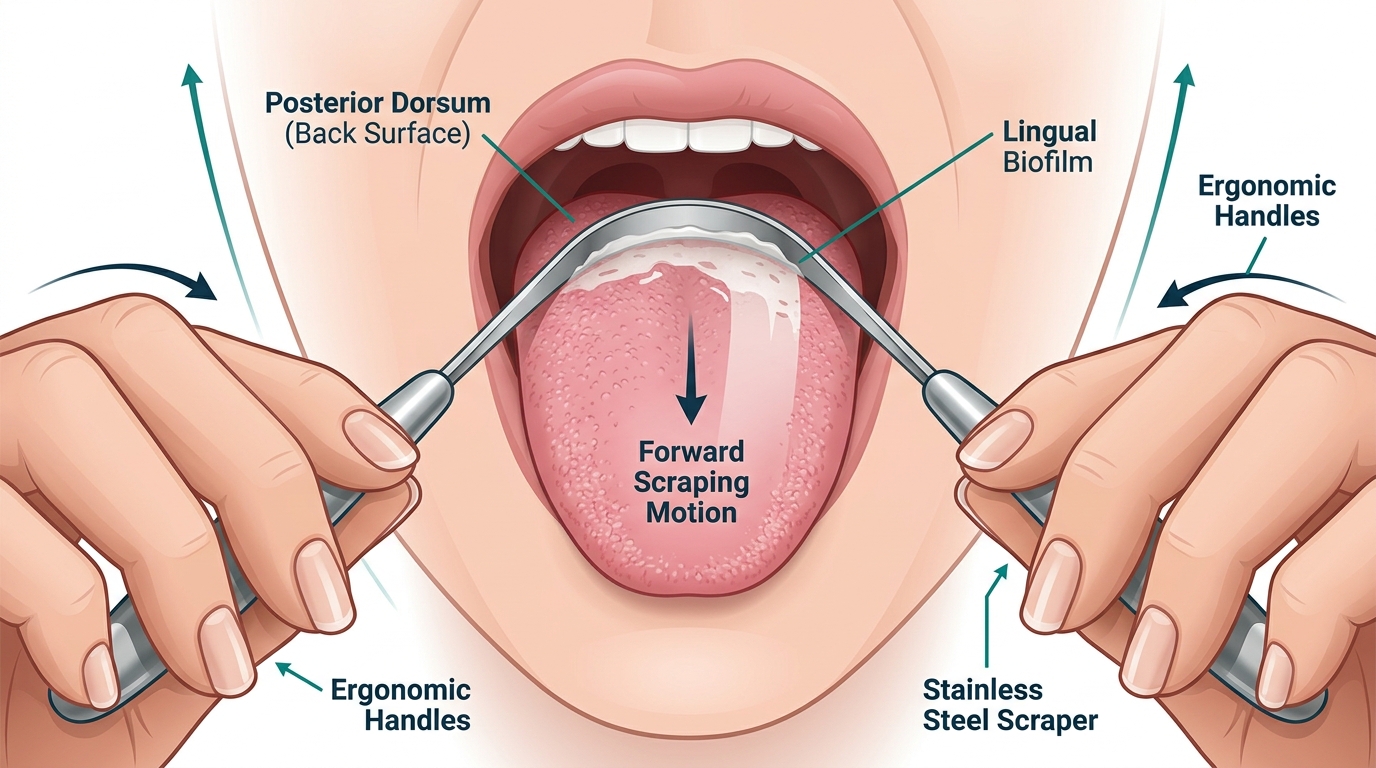
Hold the two handles of your U-shaped scraper. Place the curved edge gently toward the back third of your tongue. You do not need to push down hard; let the firm edge make solid, flat contact with the papillae.
Step 3: Pull Forward in One Smooth Stroke
In one continuous motion, draw the scraper forward toward the tip of your tongue. You will immediately see a yellowish-white paste collected on the edge of the tool.
Step 4: Rinse and Repeat (3 to 4 Strokes)
Rinse the collected debris off the scraper under warm running water. Repeat the stroke 3 to 4 times, covering the center, left lateral border, and right lateral border of the tongue.
Step 5: Clean the Scraper
Wash the scraper with antibacterial soap and warm water, dry it thoroughly, and store it in an open, dry container.
How to Prevent the Gag Reflex While Scraping
If you struggle with a sensitive gag reflex, use these three proven physiological techniques:
- Keep Your Eyes Open: Staring at a specific point on the mirror keeps the brain focused, overriding the autonomic gag reflex.
- Make a Fist with Your Left Thumb Tucked: Squeezing your left thumb inside a tight fist stimulates a pressure point that neurologically dampens the pharyngeal spasm reflex.
- Start Middle, Work Backward: On day one, start halfway back on your tongue. Over the course of 7 days, move the scraper a few millimeters further back each morning as your soft palate desensitizes.
Practitioner Insight: The Limitation of Scraping Alone
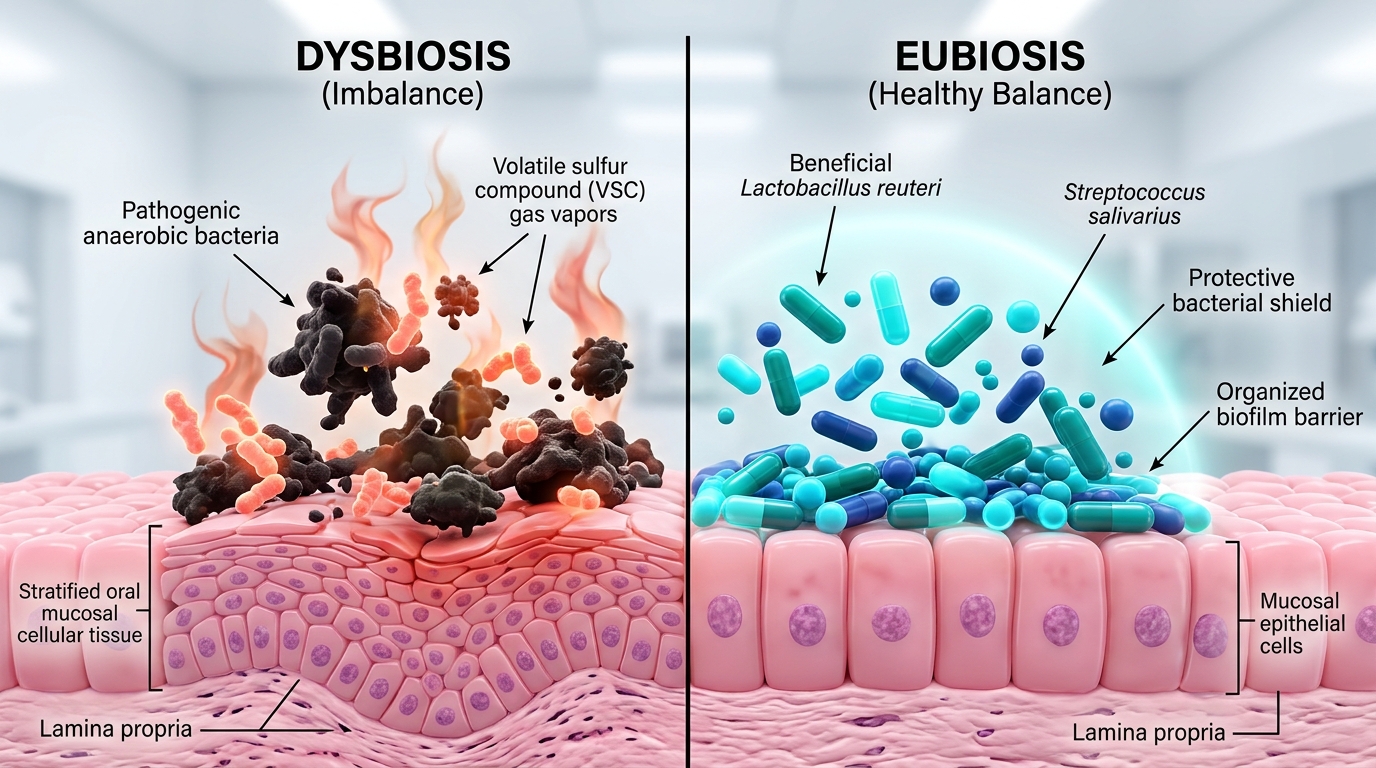
[!NOTE] What experienced dental researchers know: Mechanical scraping clears the top layers of the biofilm, but microscopic bacteria remain embedded in the microscopic pits around the circumvallate papillae. Within 4 to 6 hours, those remaining bacteria multiply back to baseline if left unchecked. To achieve all-day fresh breath, pair mechanical tongue scraping with biological recolonization. Once the tongue is clean, dissolve an oral probiotic lozenge containing Streptococcus salivarius K12 or Lactobacillus reuteri. These beneficial microbes occupy the newly cleared space, actively outcompeting sulfur-producing anaerobes.
Decision Framework: Choosing Your Tongue Cleaning Approach
| Observed Tongue Condition | Recommended Tool | Next Clinical Step |
|---|---|---|
| Thick white/yellow coating on back of tongue | Stainless steel U-shaped scraper (3 gentle passes) | Hydrate with water + bedtime oral probiotic lozenges. |
| Red, sensitive, or burning tongue surface | Avoid metal tools; use soft silicone scraper | Dental exam to check for geographic tongue or vitamin B deficiency. |
| White curd-like patches that resist scraping | Do not scrape (risk of mucosal bleeding) | Medical consultation to evaluate for oral candidiasis (fungal thrush). |
Essential Dental Care Notice: oral concerns
Supplements and oral probiotics are exploratory adjuncts, not primary clinical treatments. They cannot reverse deep periodontal pockets, remove calcified tartar, or cure active dental infections. If you experience persistent bleeding, severe bad breath lasting weeks, or oral pain, schedule an in-person evaluation with a licensed dental professional.
Scientific Sources & Evidence References
Our editorial desk validates medical statements using peer-reviewed dental literature, clinical trials, and clinical consensus guidelines.
- The effect of mechanical tongue cleaning on oral malodor and tongue coating
- Comparative efficacy of tongue scrapers and toothbrushes in reducing volatile sulfur compounds
Spot an error or outdated supplement fact? We prioritize scientific accuracy. Submit a correction or editorial feedback →