How to Floss Teeth Properly: The C-Shape Technique Step-by-Step
Master the dentist-recommended C-shape flossing technique to remove interdental plaque without cutting gums or causing pain.
If you snap a piece of string floss straight down between your teeth until it hits your gums with a painful snap, you are not alone - but you are doing more harm than good.
Flossing is not about jamming string between teeth; it is about wrapping the floss around the curved contour of each tooth to physically wipe away subgingival plaque.
When floss is snapped aggressively, it lacerates the delicate interdental papilla (gum triangle), causing bleeding and pain while leaving the actual bacterial plaque sitting untouched on the curved tooth sides. The dentist-recommended C-shape technique wipes both sides of the interdental gap safely and thoroughly.
Key Takeaways: Flossing Essentials
- The Real Goal: Flossing removes sticky microscopic plaque bacteria - not just large chunks of trapped steak or popcorn hulls.
- The Technique: Curve the string tightly into a “C” hugging the tooth surface, glide gently beneath the gumline, and scrape upward from gum to crown.
- The Timing: Floss before you brush your teeth to loosen debris and allow toothpaste minerals to penetrate interdental gaps.
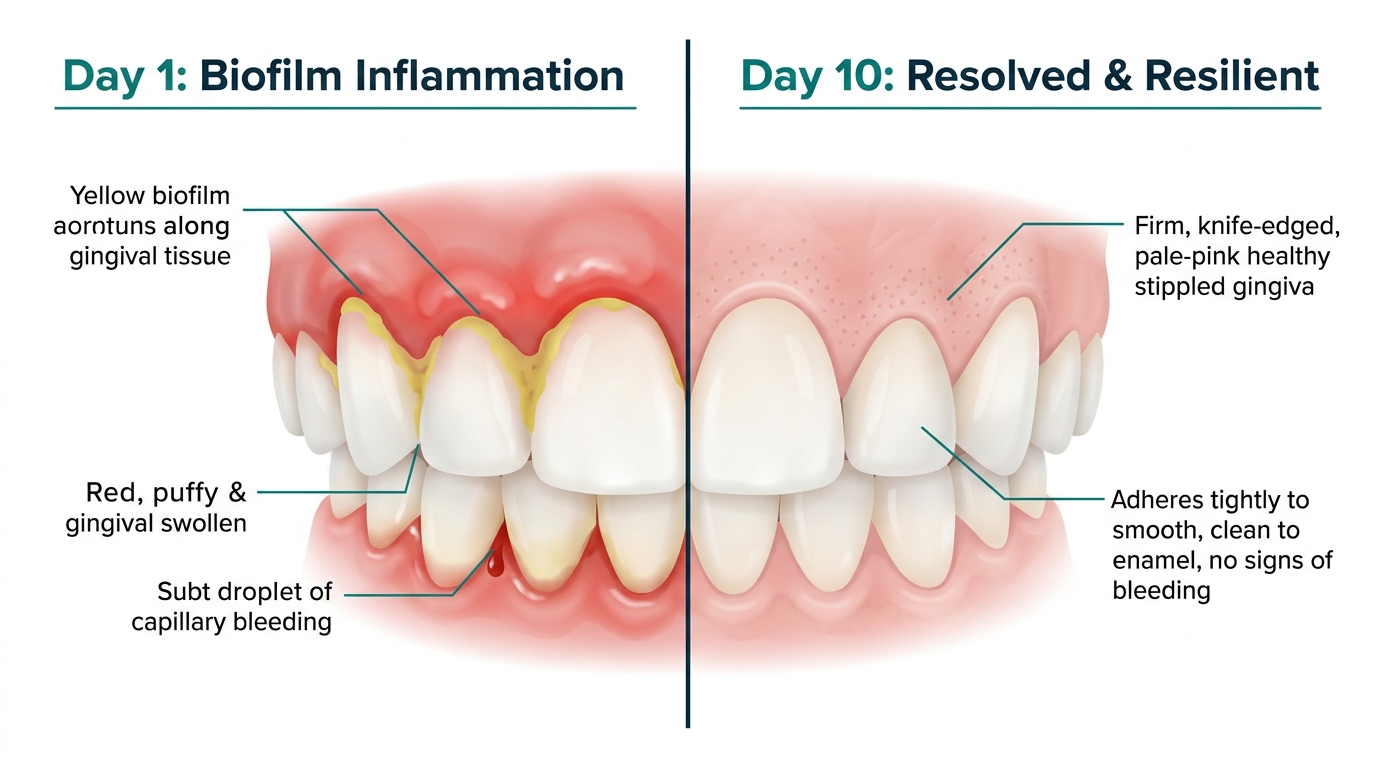
- The Bleeding Truth: Gums bleed because of existing plaque inflammation (gingivitis), not because flossing is bad for you. Daily flossing stops bleeding within 7 to 10 days.
Comparison: String Floss vs. Floss Picks vs. Water Flossers
| Cleaning Tool | Plaque Removal Efficacy | Ease of Use | Reaches Subgingival Pockets? | Best Situation |
|---|---|---|---|---|
| Traditional String Floss (Woven) | Highest (90%+) | Moderate (requires finger dexterity) | Yes (up to 2–3mm beneath the gum margin) | Daily standard for healthy adults with normal dexterity. |
| Floss Picks / Harps | Moderate (60%–70%) | High (convenient one-handed handle) | Limited (harder to wrap into a true C-shape) | Travel, on-the-go, or individuals with limited mobility. |
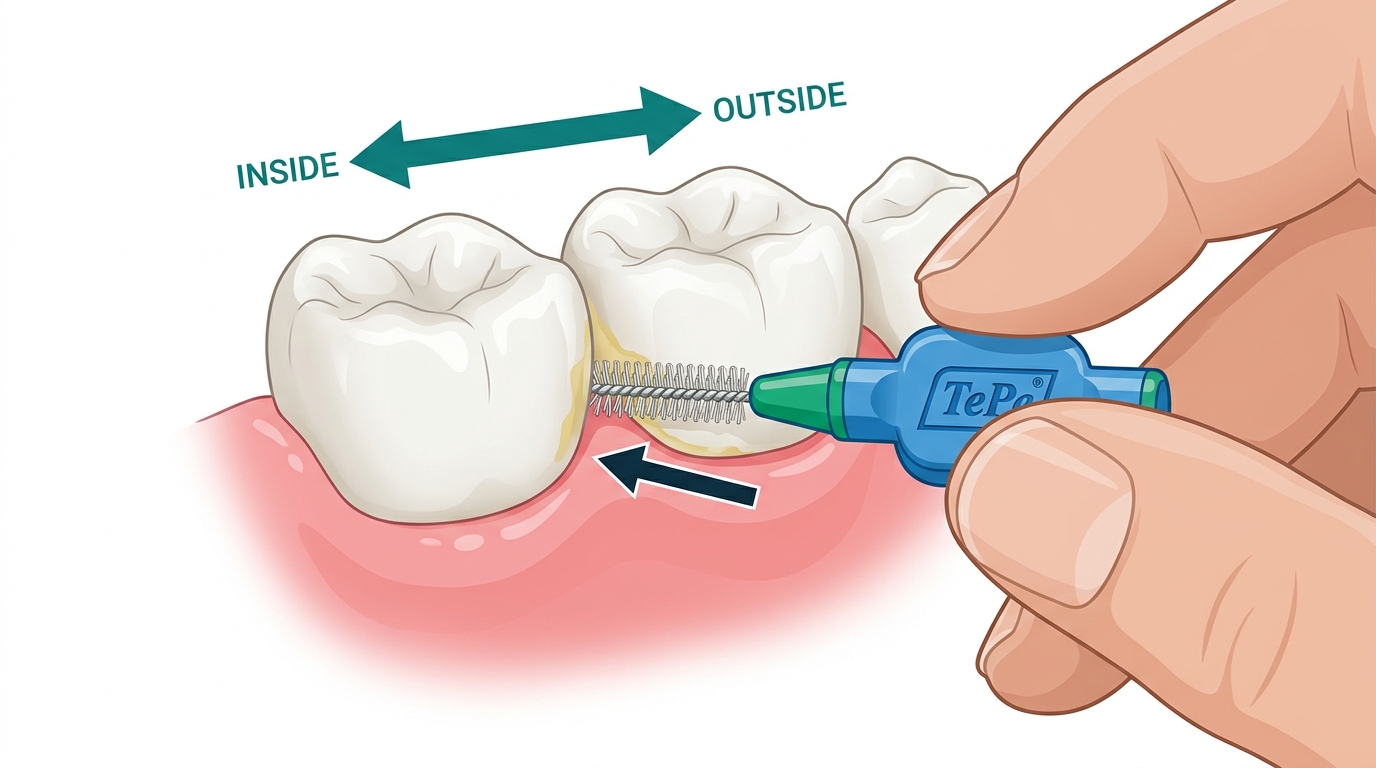
| Interdental Brushes | Highest on wide gaps | Very High (simple in-and-out motion) | Excellent in open embrasures (black triangles) | Patients with gum recession, orthodontic braces, or bridges. |
| Water Flossers (Oral Irrigators) | High on food debris / moderate on sticky plaque | Very High (gentle pulsed water stream) | Flushes up to 4–6mm deep pockets | Braces, dental implants, or sensitive/bleeding gums. |
The 5-Step “C-Shape” Flossing Protocol
Step 1: Measure 18 Inches of Floss
Break off approximately 18 inches (45 cm) of floss. Wind most of it around the middle finger of one hand, and a small amount around the middle finger of the other hand. Using your middle fingers leaves your index fingers and thumbs completely free to steer the floss with millimeter precision.
Step 2: Leave a 1-to-2 Inch Working Gap
Hold a clean 1-inch section of floss taut between your thumbs and index fingers.
Step 3: Gentle Zigzag Motion (Never Snap)
Guide the floss between your teeth using a gentle back-and-forth sawing motion. Never force or snap the floss down onto your gum tissue.
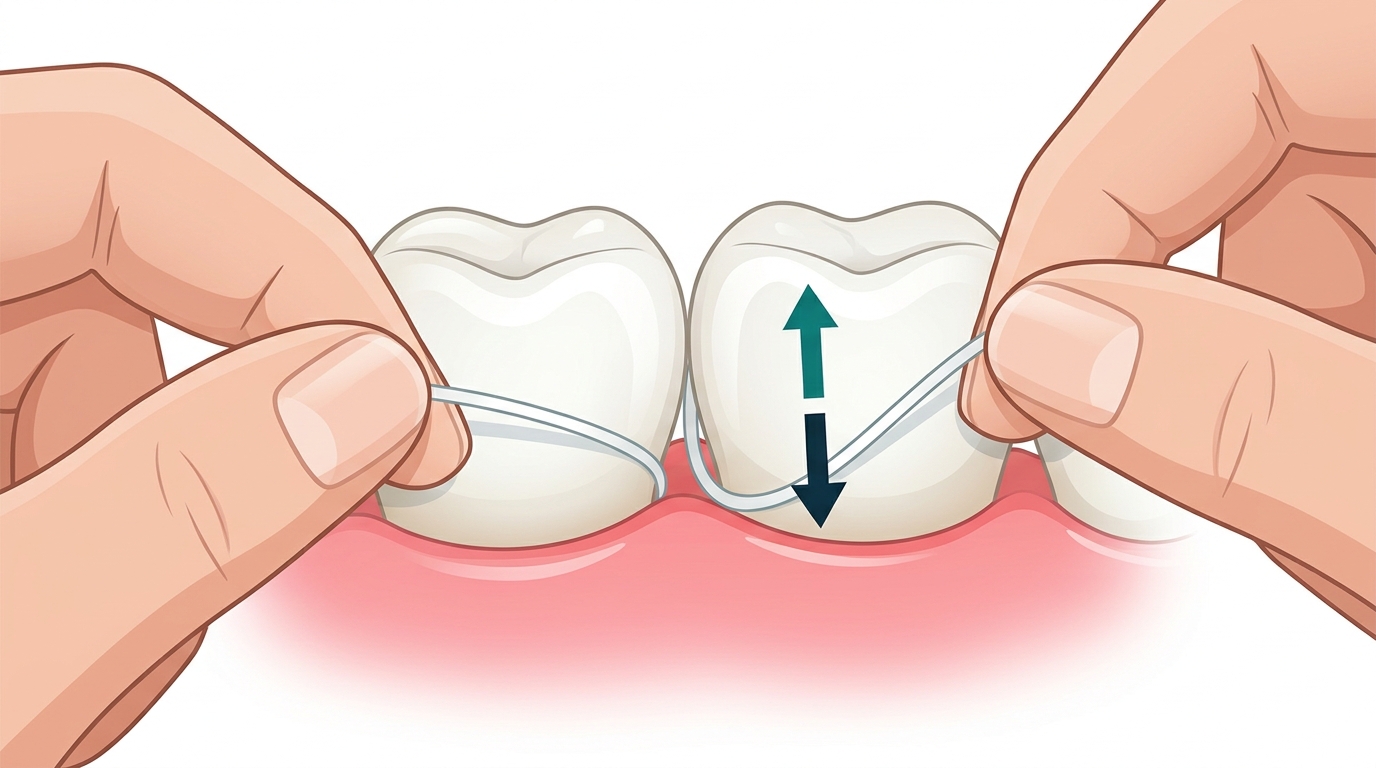
Step 4: Hug the Tooth in a “C” Shape
When the floss reaches the gumline, curve it tightly against the side of one tooth until it forms the shape of the letter “C”. Gently slide the string into the sulcus space between the tooth and the gum until you feel light resistance.
Step 5: Scrape Upward 3 to 4 Times
Press the floss firmly against the tooth surface and scrape upward, moving away from the gum toward the chewing surface. Repeat this motion on the adjacent tooth face in the same gap. Advance to a clean section of floss as you move to each new tooth.
Real-World Scenarios: Flossing Challenges & Solutions
Scenario 1: The “Tight Contact” Snag
- Situation: A patient has crowded lower front teeth where standard woven floss shreds or gets stuck painfully.
- Action: They switch to a flat monofilament PTFE floss (like Glide), which glides smoothly between tight contact points without tearing.
- Outcome: Flossing becomes completely painless, allowing them to maintain daily consistency.
Scenario 2: The “Bleeding Sink” Panic
- Situation: A 24-year-old hasn’t flossed in 6 months. On day 1, their gums bleed heavily and feel tender.
- Action: Instead of stopping, they continue gentle C-shape flossing once daily every evening before bed.
- Outcome: On day 3, bleeding decreases by half. By day 8, bleeding stops entirely as healthy, firm gum tissue replaces inflamed, engorged capillaries.
Why Pair Flossing with Oral Probiotics?
[!TIP] The Ecological Advantage: Flossing removes millions of anaerobic bacteria, but it leaves microscopic interdental pockets temporarily vacant. If left unaddressed, aggressive pathogens will rapidly repopulate those spaces. Taking a chewable oral probiotic lozenge immediately after your evening brushing and flossing routine floods the oral cavity with billions of beneficial bacteria (Lactobacillus reuteri and Bifidobacterium lactis) that colonize the clean crevices, preventing odor-producing bacteria from taking over overnight.
Essential Dental Care Notice: oral concerns
Supplements and oral probiotics are exploratory adjuncts, not primary clinical treatments. They cannot reverse deep periodontal pockets, remove calcified tartar, or cure active dental infections. If you experience persistent bleeding, severe bad breath lasting weeks, or oral pain, schedule an in-person evaluation with a licensed dental professional.
Scientific Sources & Evidence References
Our editorial desk validates medical statements using peer-reviewed dental literature, clinical trials, and clinical consensus guidelines.
- Efficacy of interdental cleaning devices in preventing periodontal diseases and dental caries
- Evaluation of the C-shape flossing technique on subgingival plaque debridement
Spot an error or outdated supplement fact? We prioritize scientific accuracy. Submit a correction or editorial feedback →